
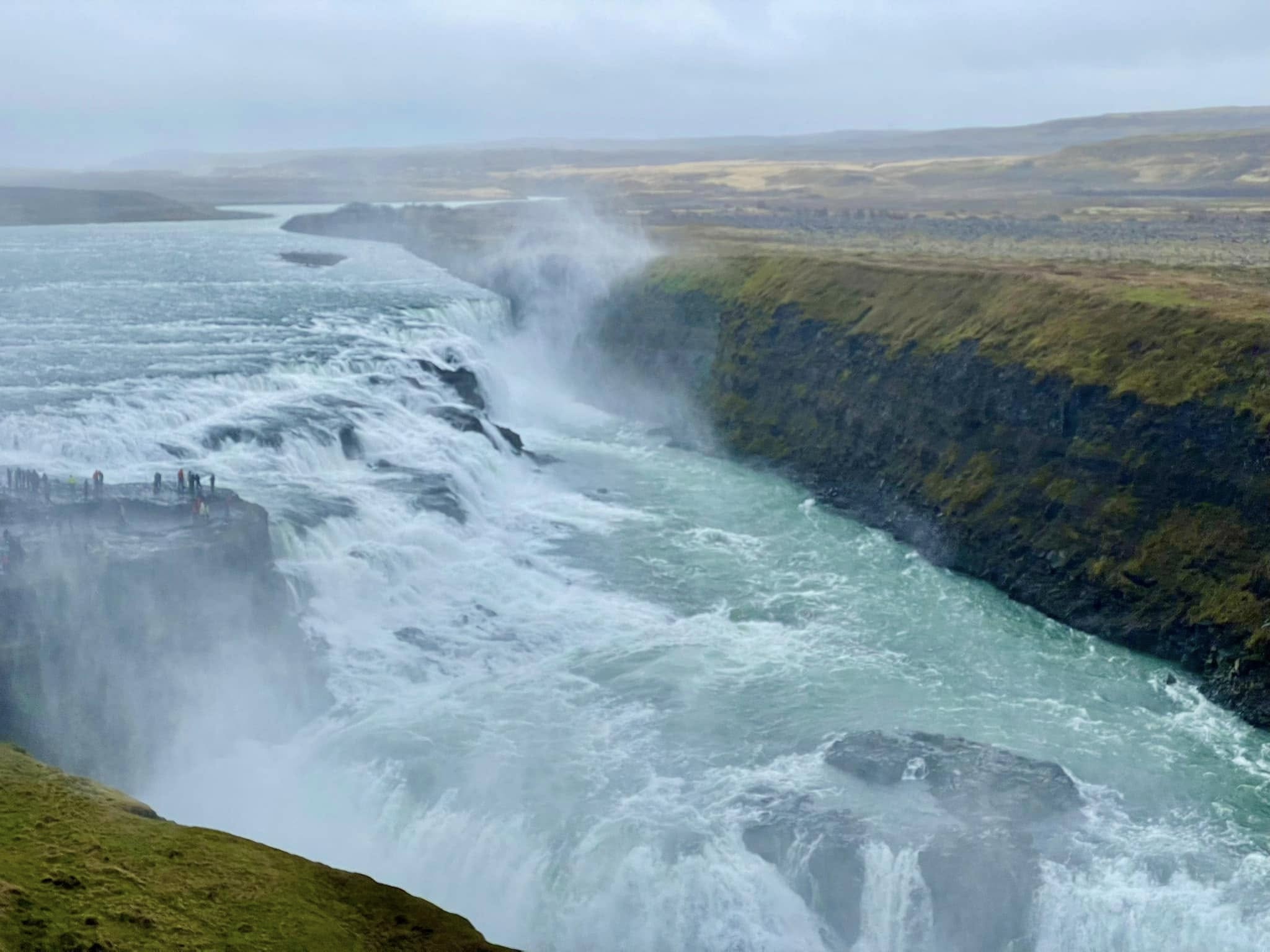
Thankfully the next day though cloudy was much nicer than the relentless rain the previous day. We quickly had a early breakfast and drove to the most famous tourist loop in Iceland also known as the Golden Circle
The Golden Circle is a 300-kilometer loop from Reykjavík that distills the country’s dramatic tectonic and geothermal activity into three primary stops.
First stop for us was Þingvellir National Park, a UNESCO World Heritage site where the North American and Eurasian tectonic plates visibly drift apart and where the world’s oldest surviving parliament was founded in 930 AD.
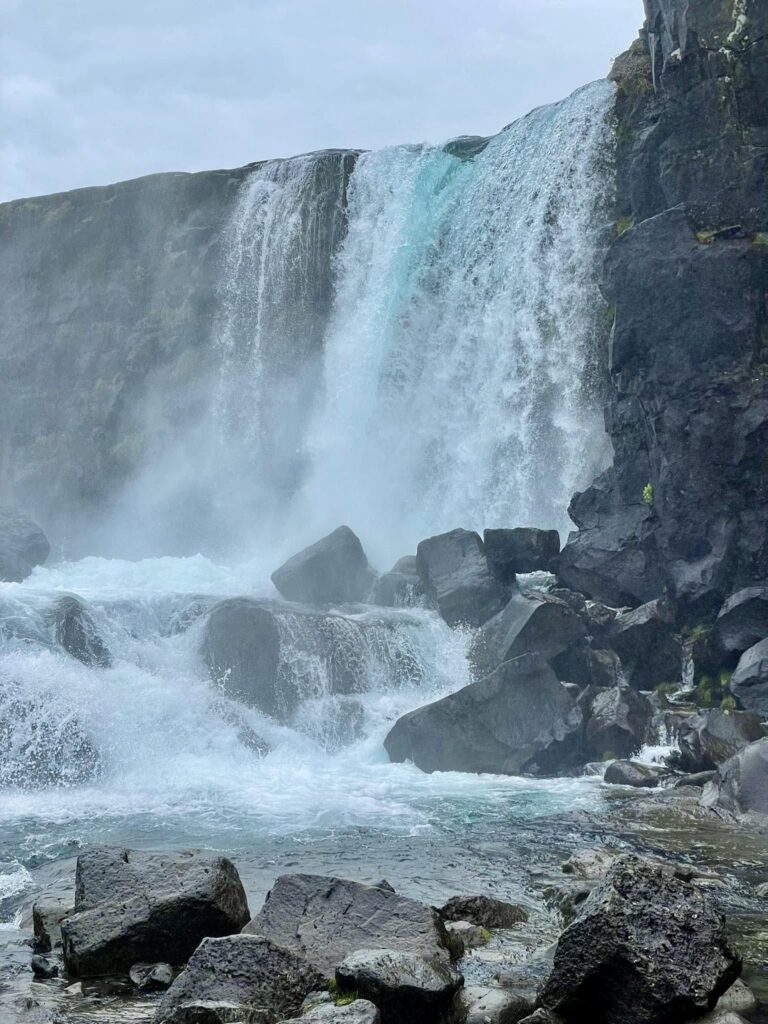
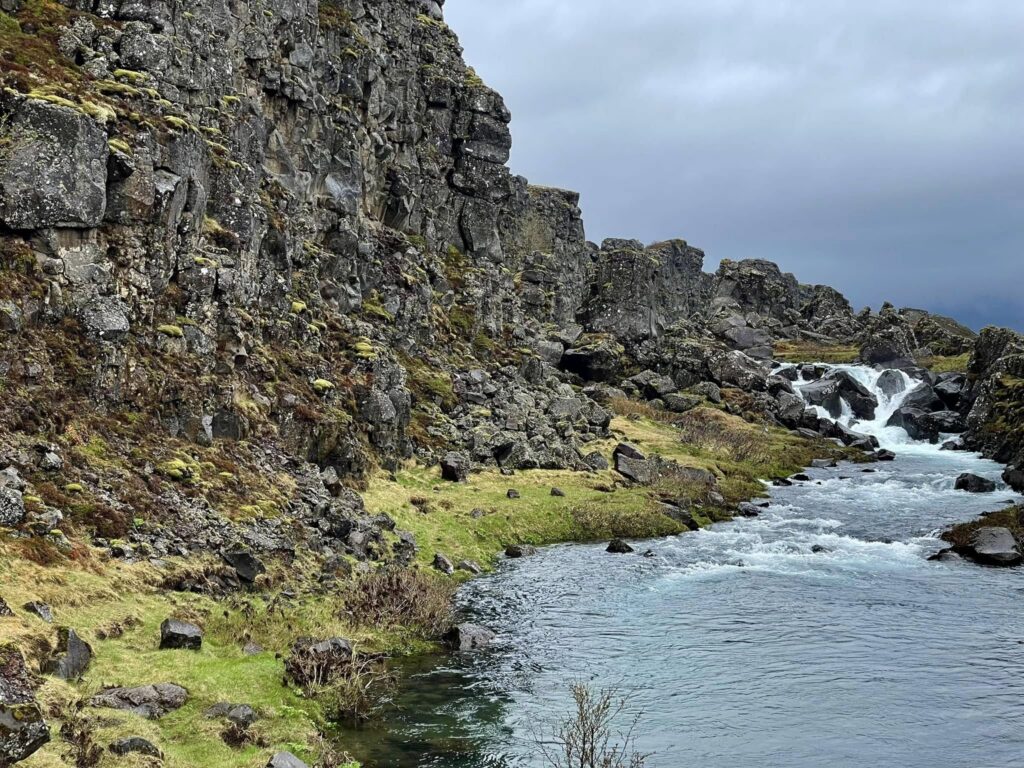
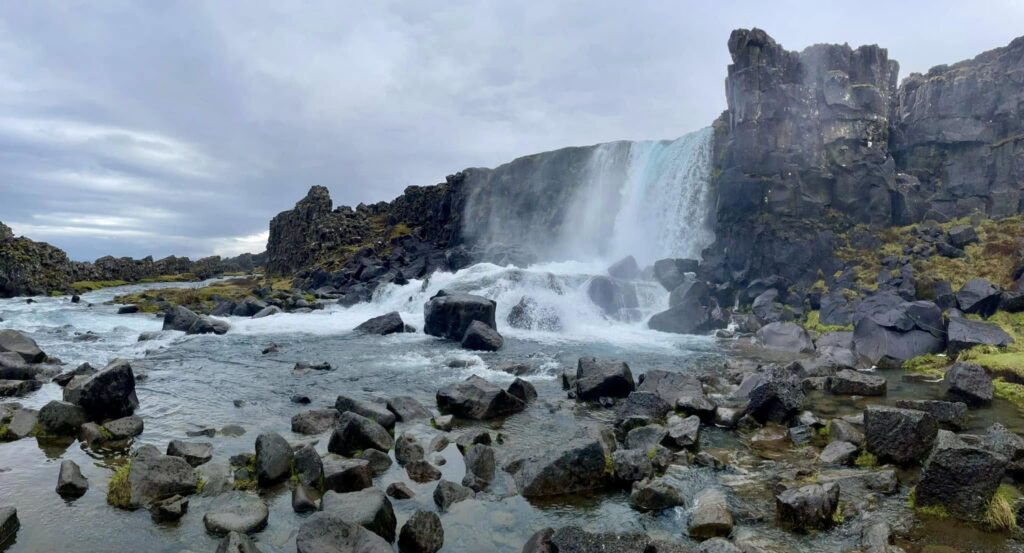
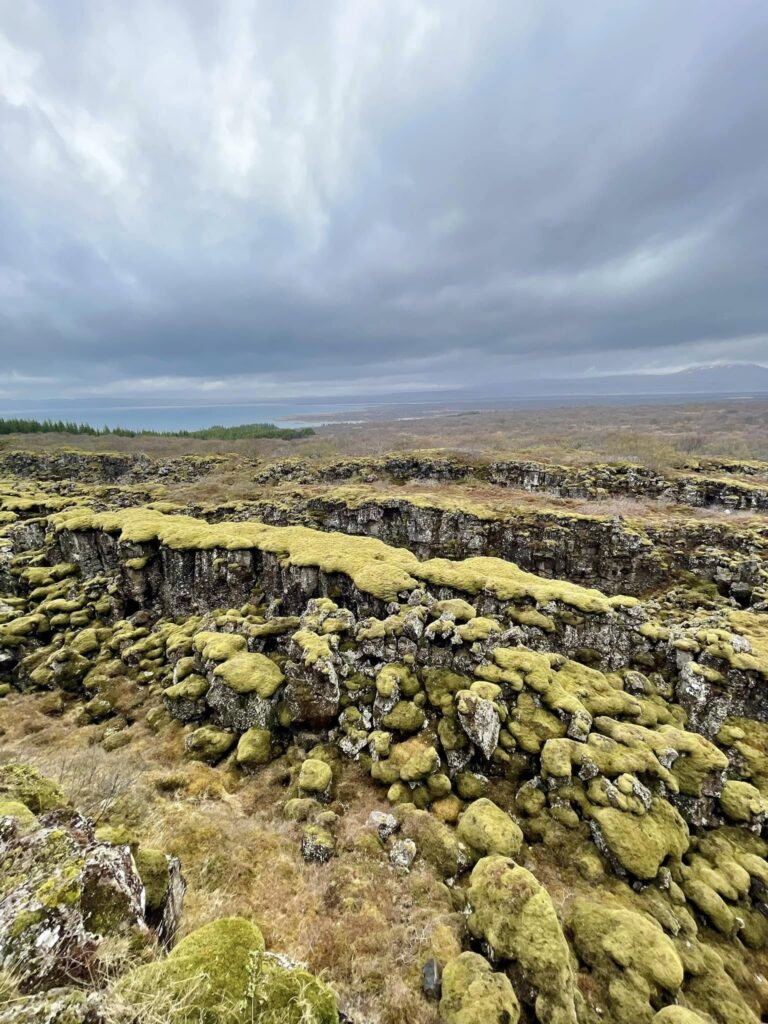
Our next stop was the Almannagjá Rift within Þingvellir (Thingvellir) National Park which is actually the edge of the North American tectonic plate. The valley floor below is part of a rift valley that forms the boundary where the North American and Eurasian plates are slowly pulling apart at a rate of about 2cm per year and one of the one of the few places on Earth where you can literally walk between two continental plates on dry land.
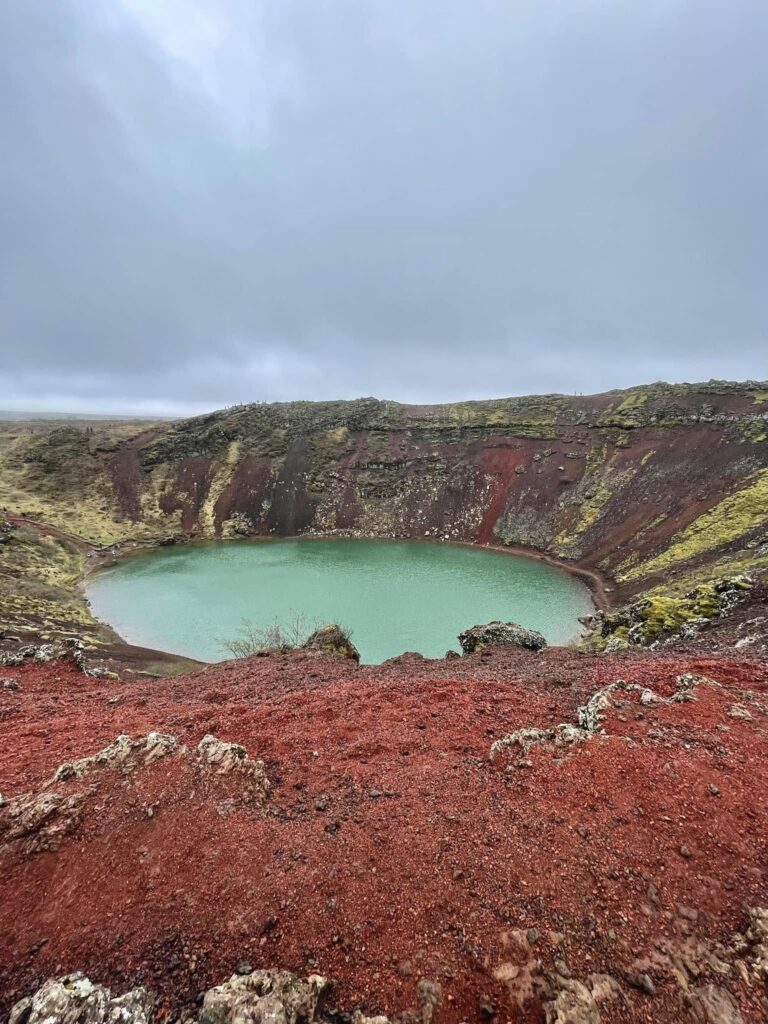
Next stop for us was the Kerið (Kerid) Volcanic Crater. Formed approximately 3,000 to 6,500 years ago, Kerið is a volcanic caldera located in the Grímsnes area of South Iceland, frequently visited as a scenic addition to the Golden Circle route. Unlike many of Iceland’s black volcanic landscapes, Kerið is famous for its steep, rust-red slopes—a result of relatively young iron-rich lava that has not yet fully oxidized. The crater, which measures 55 meters deep and 270 meters across, houses a vivid teal lake that is uniquely fed by the groundwater table rather than rainfall, meaning the water level rises and falls in sync with the surrounding earth. Historically, the caldera was not formed by an explosion but by a cone volcano that emptied its magma chamber and collapsed inward, creating a natural amphitheater so acoustically perfect that musicians have occasionally used floating platforms on the lake for concerts
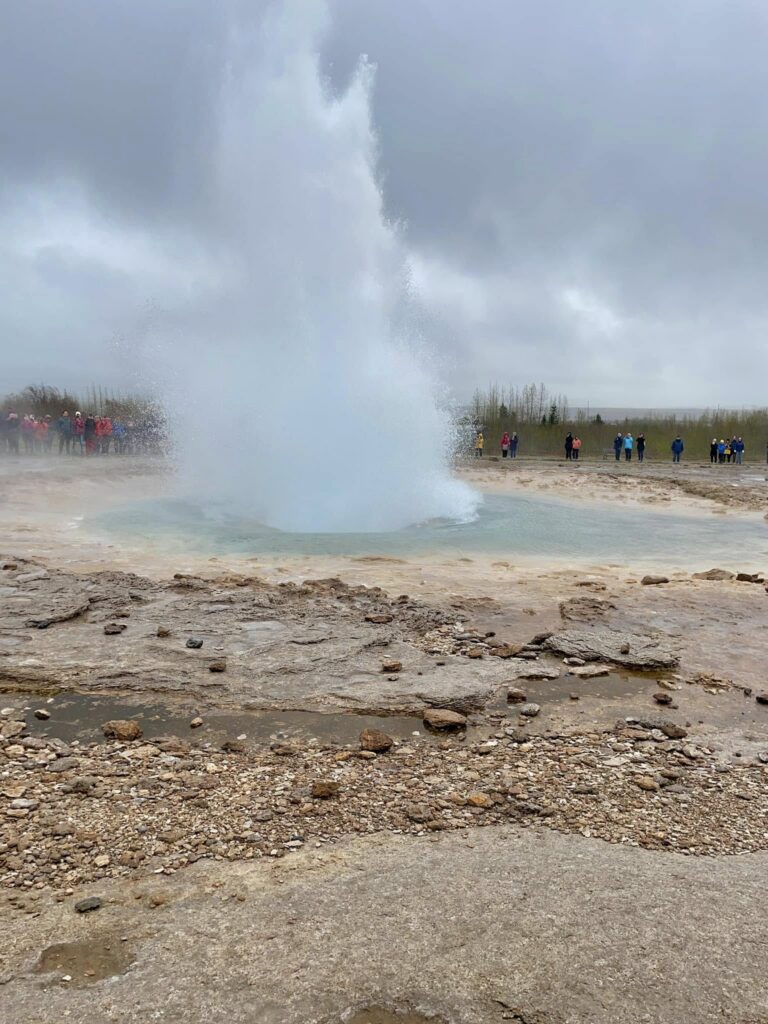
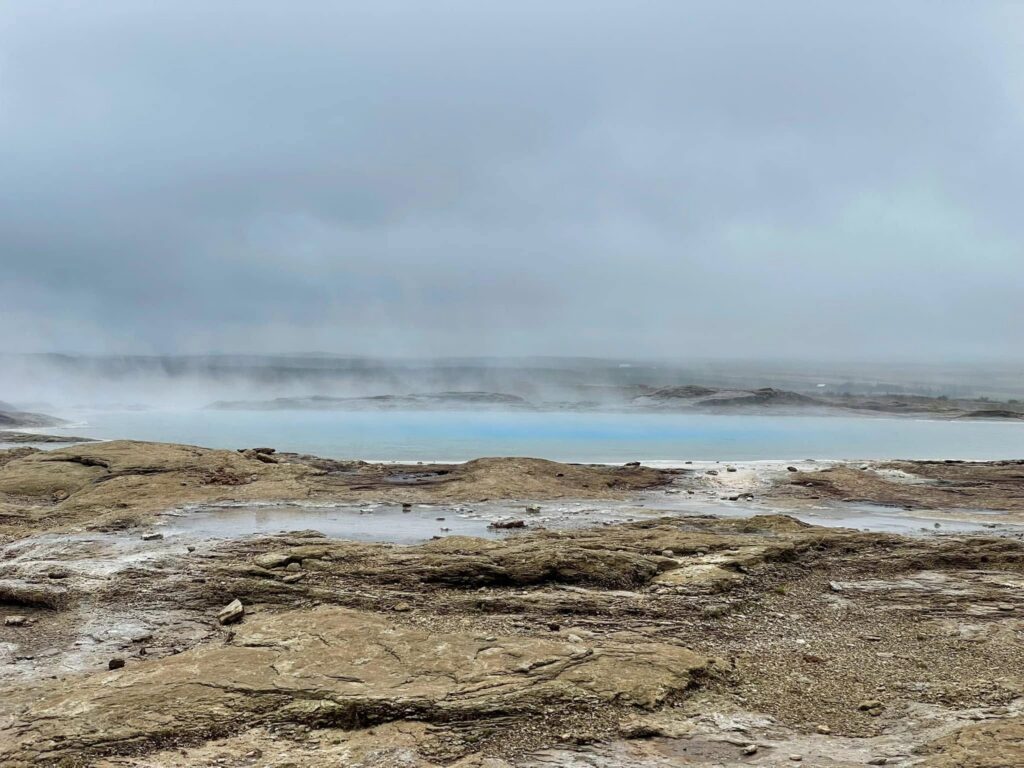
The next stop for us was the Geysir Geothermal Area, home to the reliable Strokkur geyser which erupts every few minutes
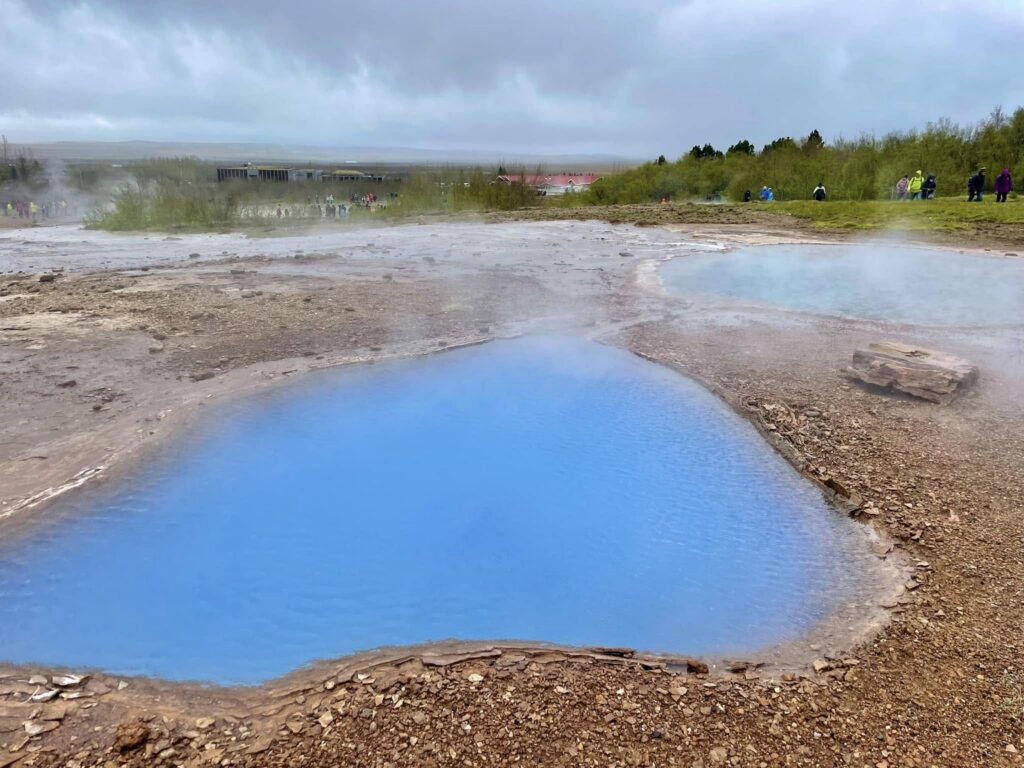
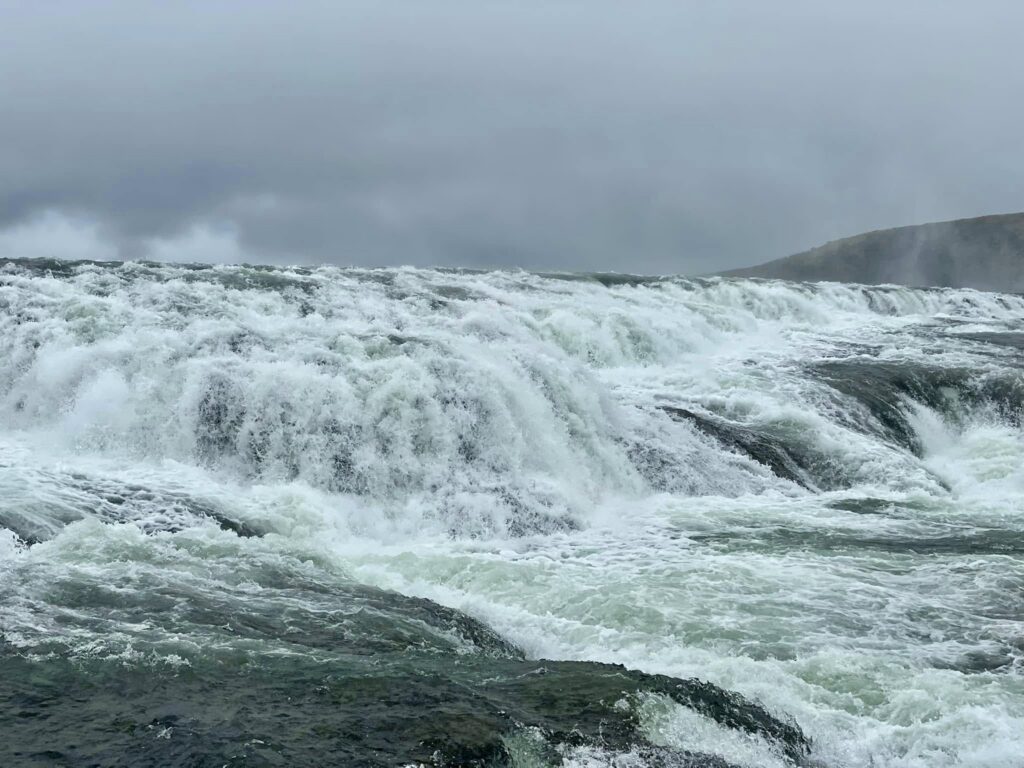
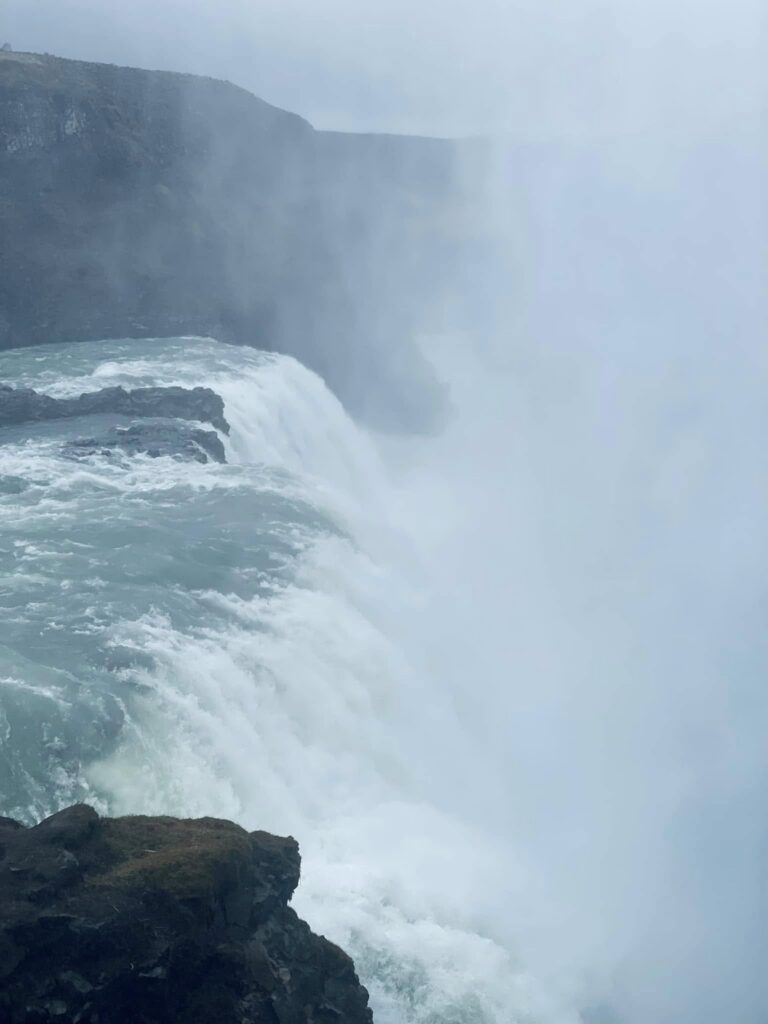
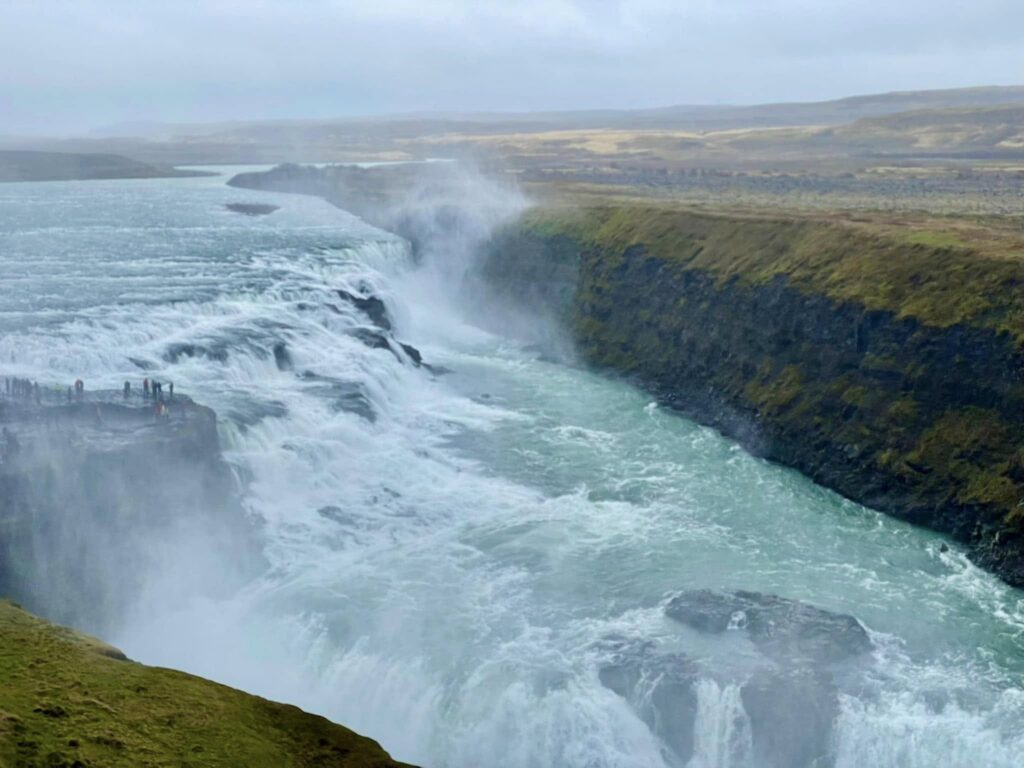
Last stop for the day was the awe inspiring thunderous Gullfoss, a massive “Golden Falls” thundering two-tiered waterfall that plunges a total of 32 meters into a deep, narrow canyon of the Hvítá River. Fed by the Langjökull glacier, the falls are famous for the golden-brown hue the water takes on as it carries glacial sediment, often producing vivid rainbows in the heavy mist on sunny days. Beyond its geological grandeur, Gullfoss holds a significant place in Icelandic history as the site of the country’s first major environmental battle in the early 20th century; Sigríður Tómasdóttir, the daughter of the local landowner, famously fought a decades-long legal battle—even threatening to throw herself into the falls—to prevent foreign investors from damming the river for a hydroelectric plant. Her successful protest preserved the site for future generations, and today a memorial stands near the falls to honor her as Iceland’s first environmentalist.
Tired after a very fun but long day, we returned to the hotel to rest and prepare for our next day to leave for Hela
 Elizabeth Soule