
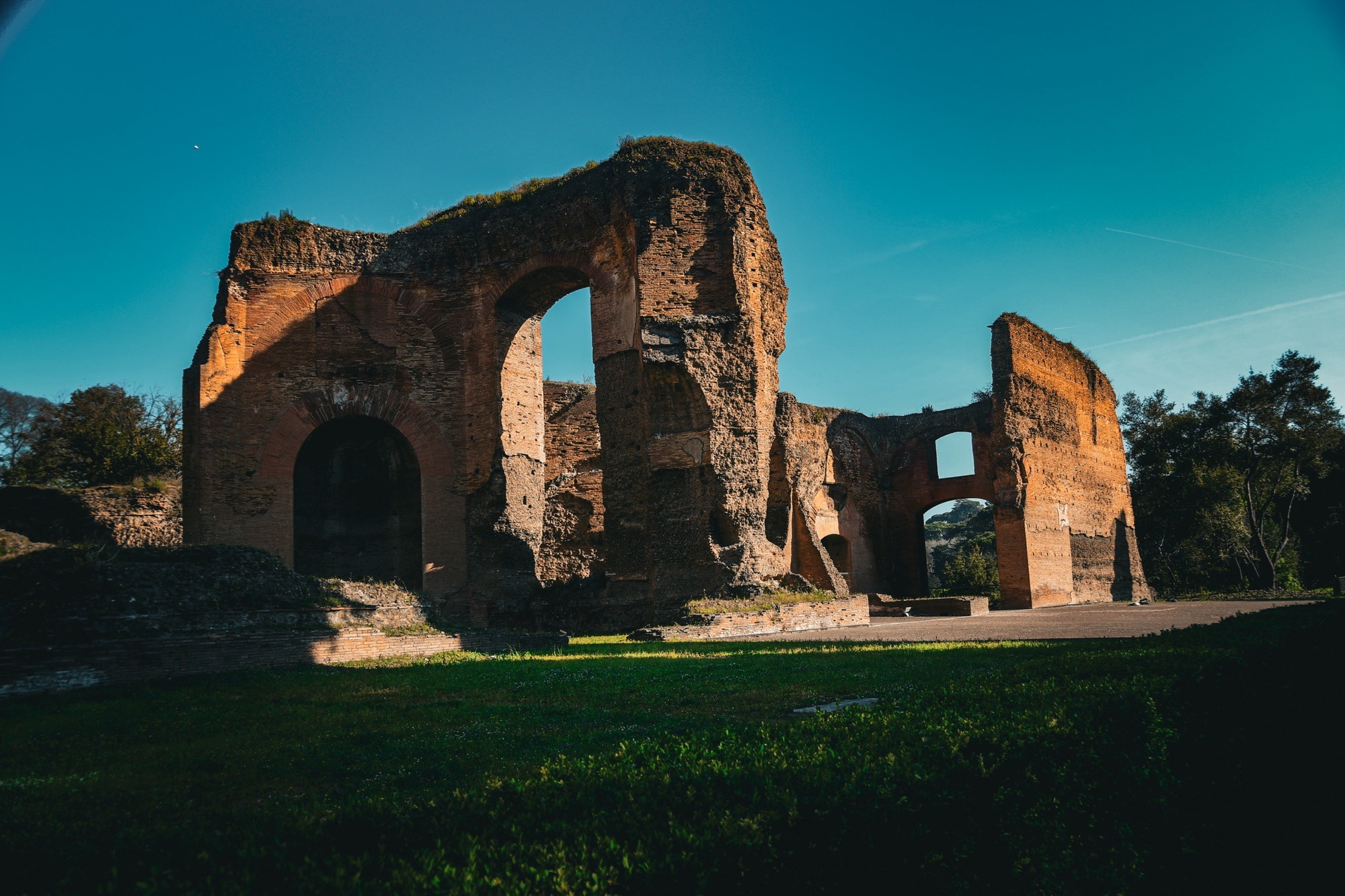
While we are both “planners” when it come to travel, sometimes flexibility is a necessity. We originally planned for a day trip on Day 4. By the end of Day 2 though, we realized we needed more time to just see Rome. There was also a rail maintenance worker strike that was likely going to cause delays. So we scrapped our day trip plans and instead spent day 4 at the Baths of Caracalla and in Trastevere.
The Baths of Caracalla are south of the Colesseum and Roman forum. The Baths were likely built between AD 211 and 217 during the reigns of the emperors Septimus Severus and Caracalla. They were in operation until the 530s, when the acquaducts that supplied them were destroyed and the city shrank after the gothic seige of Rome. It was more than just a place to bathe, with an entire athletic complex, a library, ornate gardens, and a sports running track.
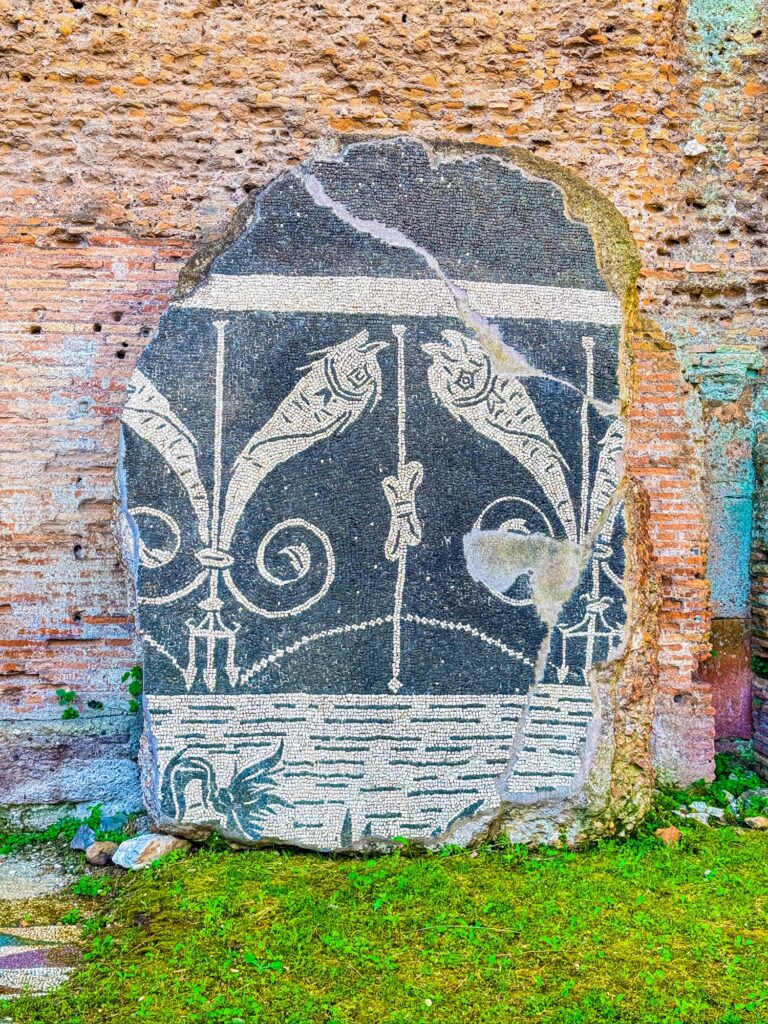
Within the Baths are some remarkable pieces of original Roman history that survived the “recycling” of materials I mentioned in the post about the Colosseum. There are pieces of original mosaics from the walls and floors on display, and a few pieces of marble that hint at the once lavish interior. A place not to miss is in the southern corner, where excavations unearthed a house that predates the baths, likely built around 135BC. You can enter a tunnel to see the remains of a prayer room with frescoed ceilings of Roman and Egyptian gods. It was remarkable to stand within and try to imagine the people who lived here over 2000 years ago.
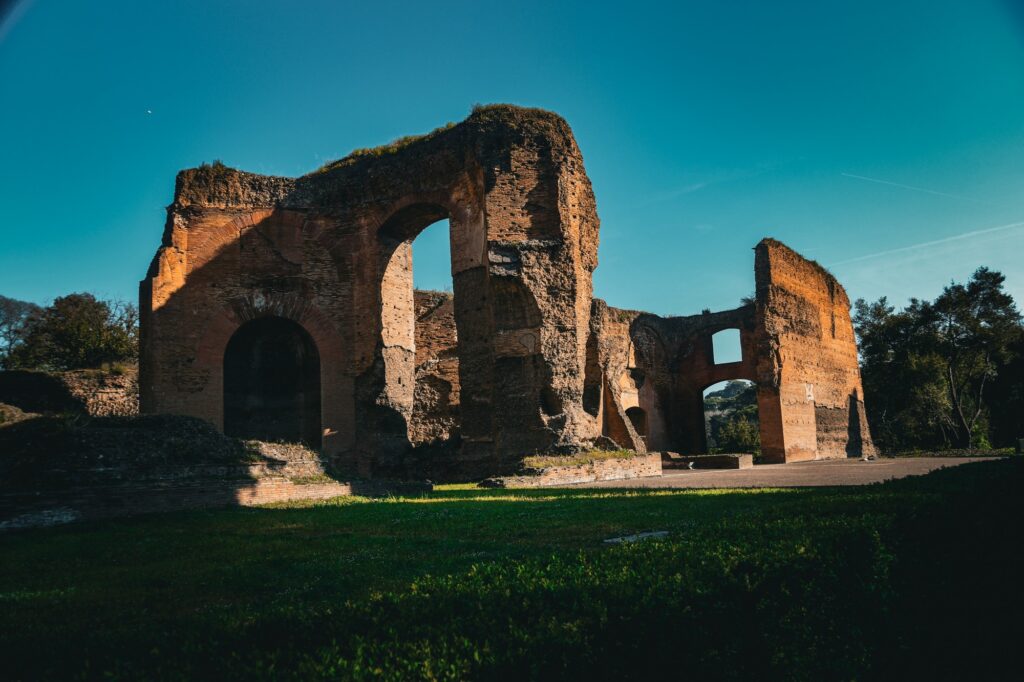
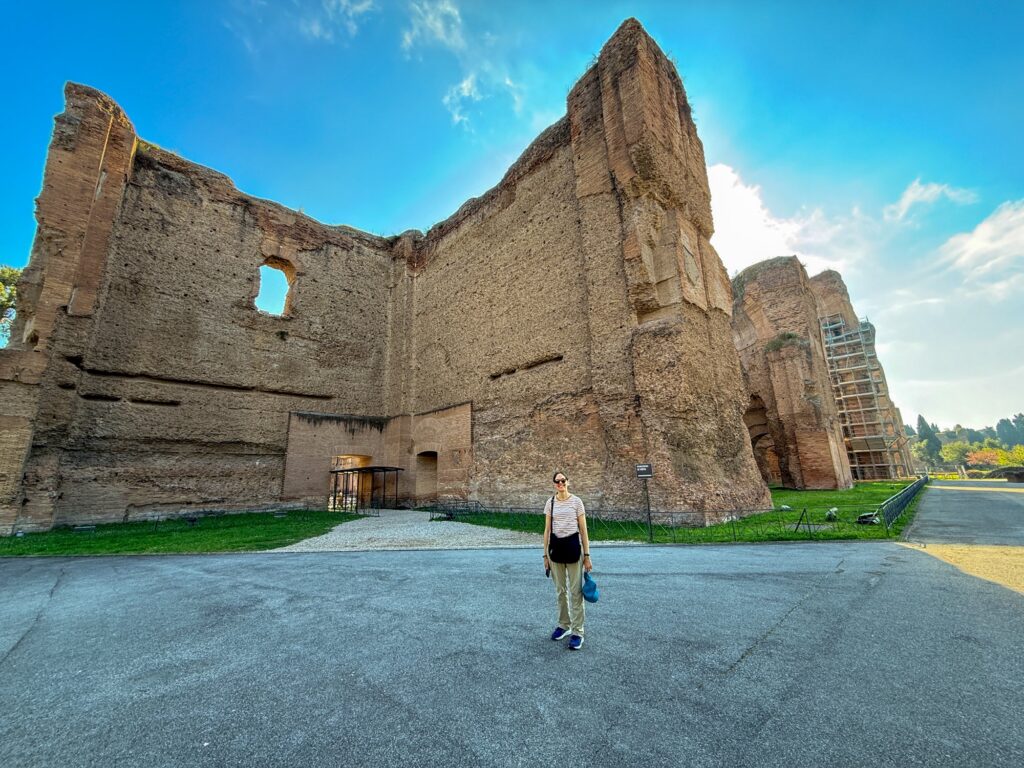
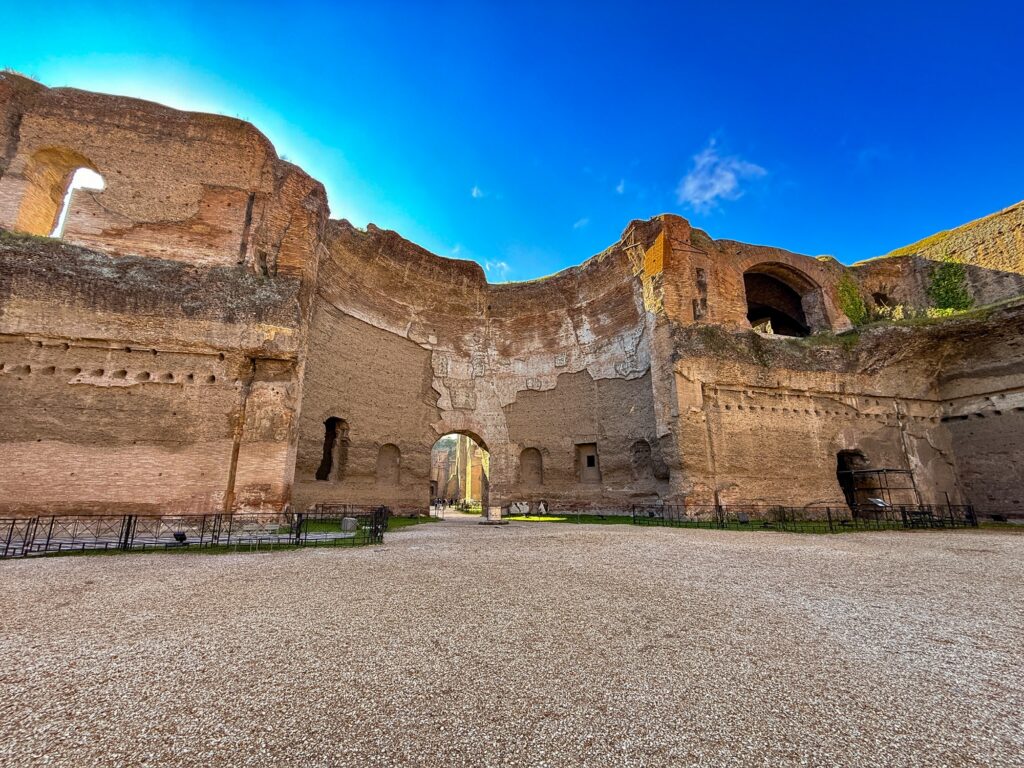
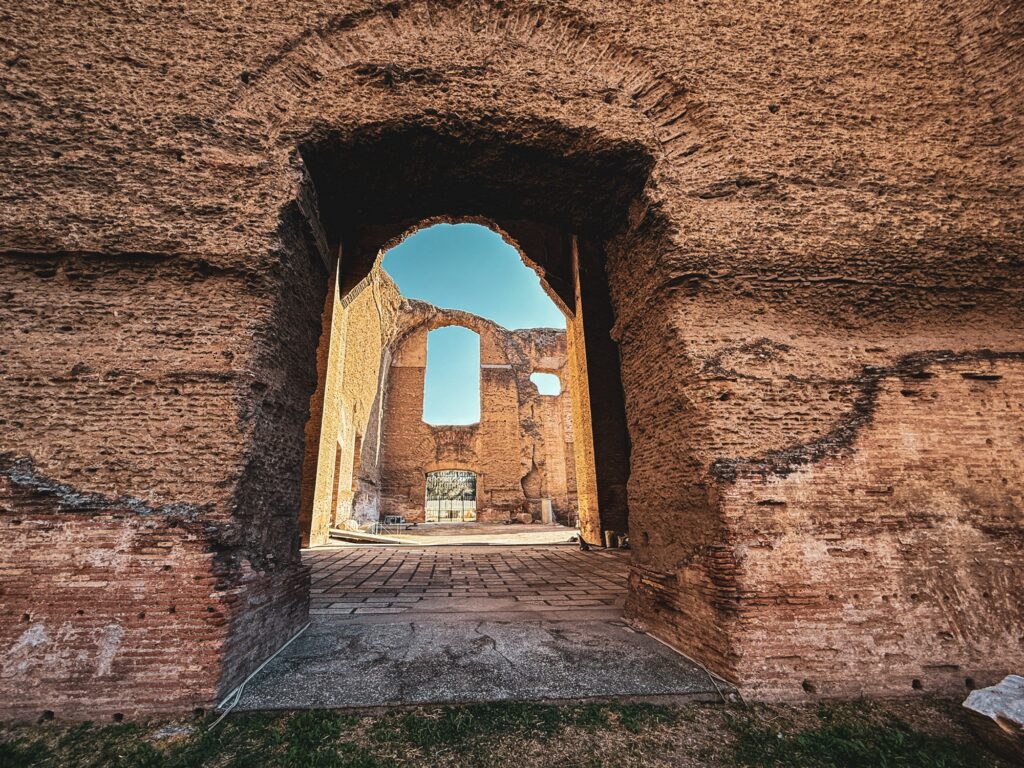
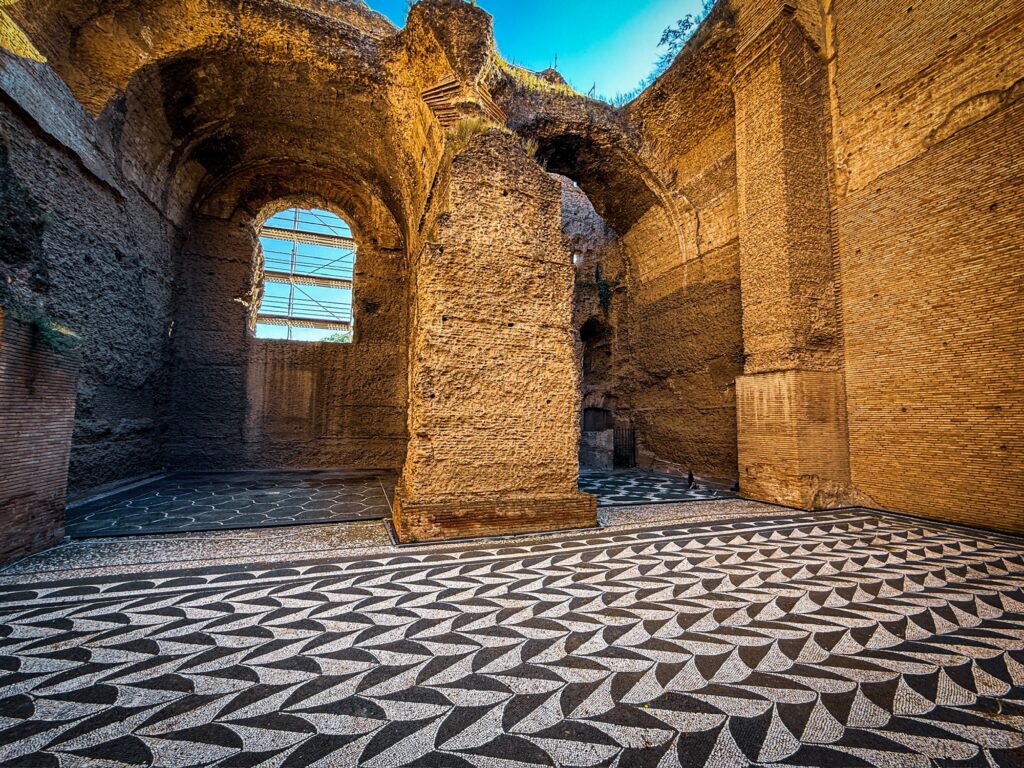
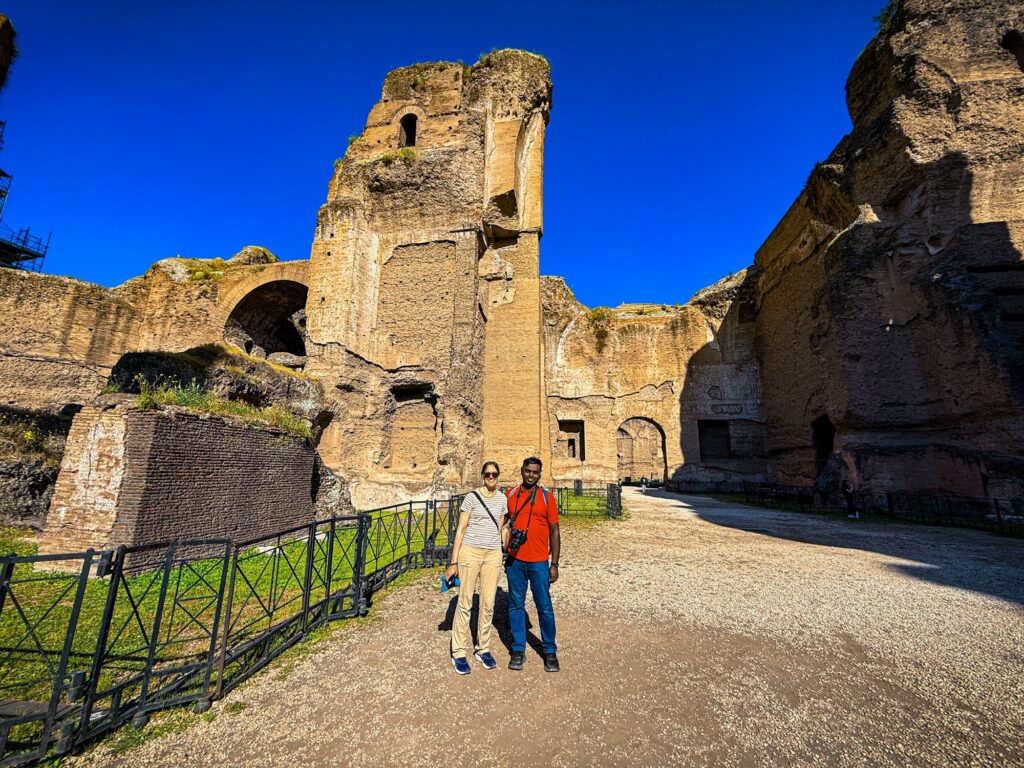
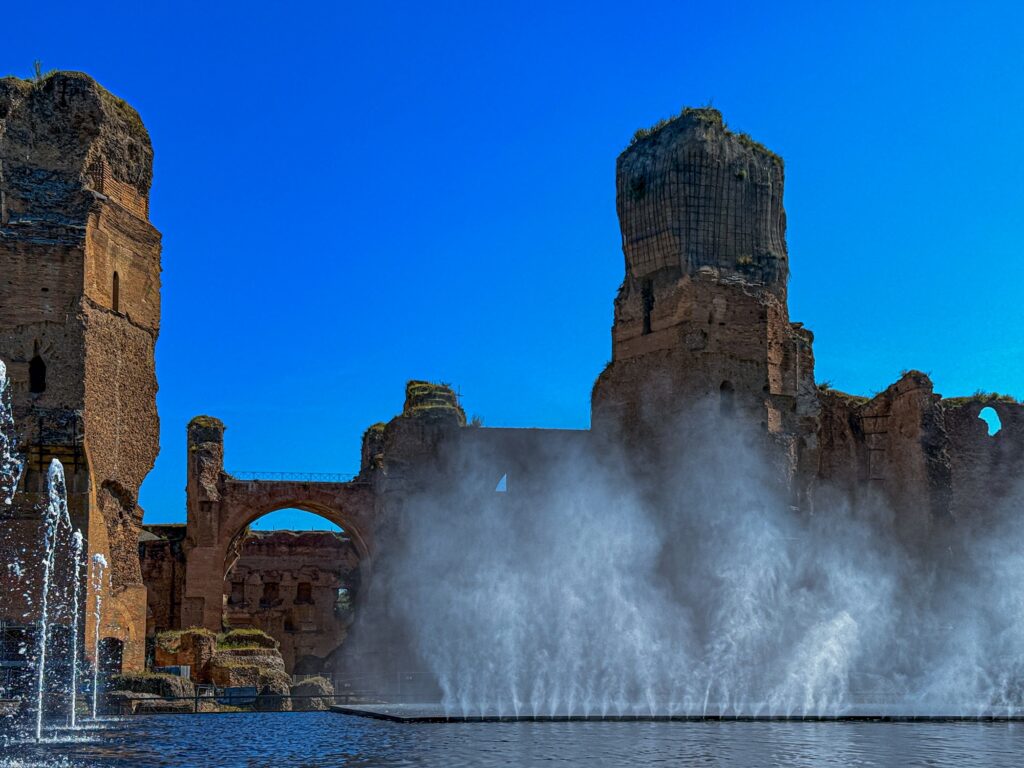
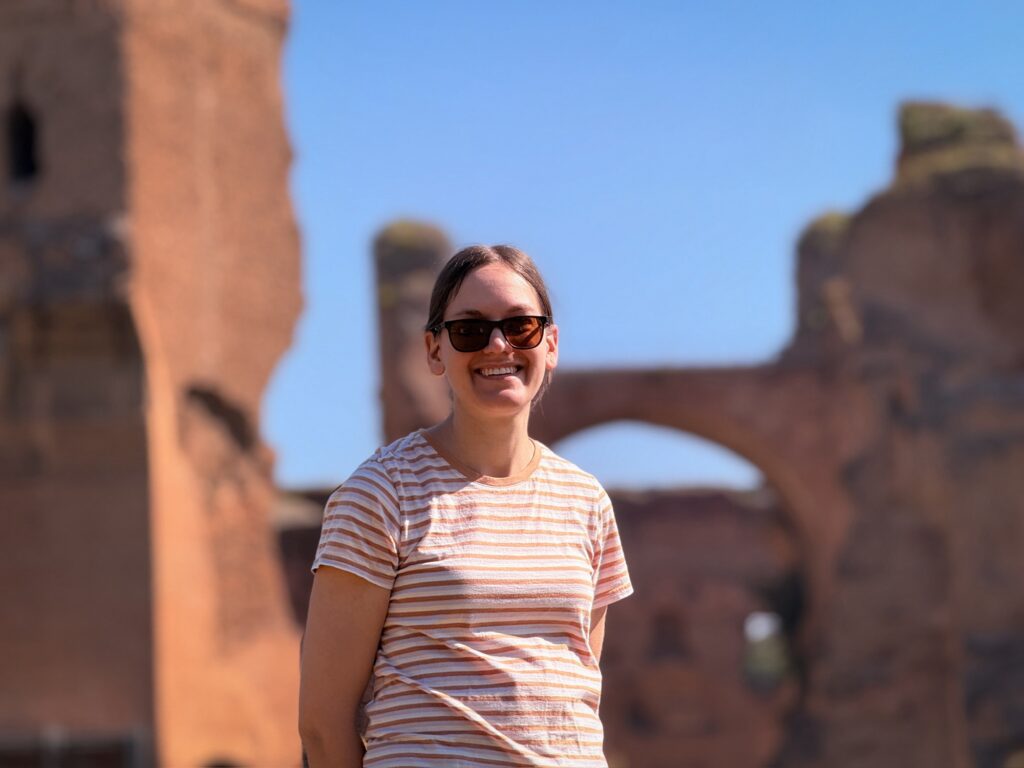
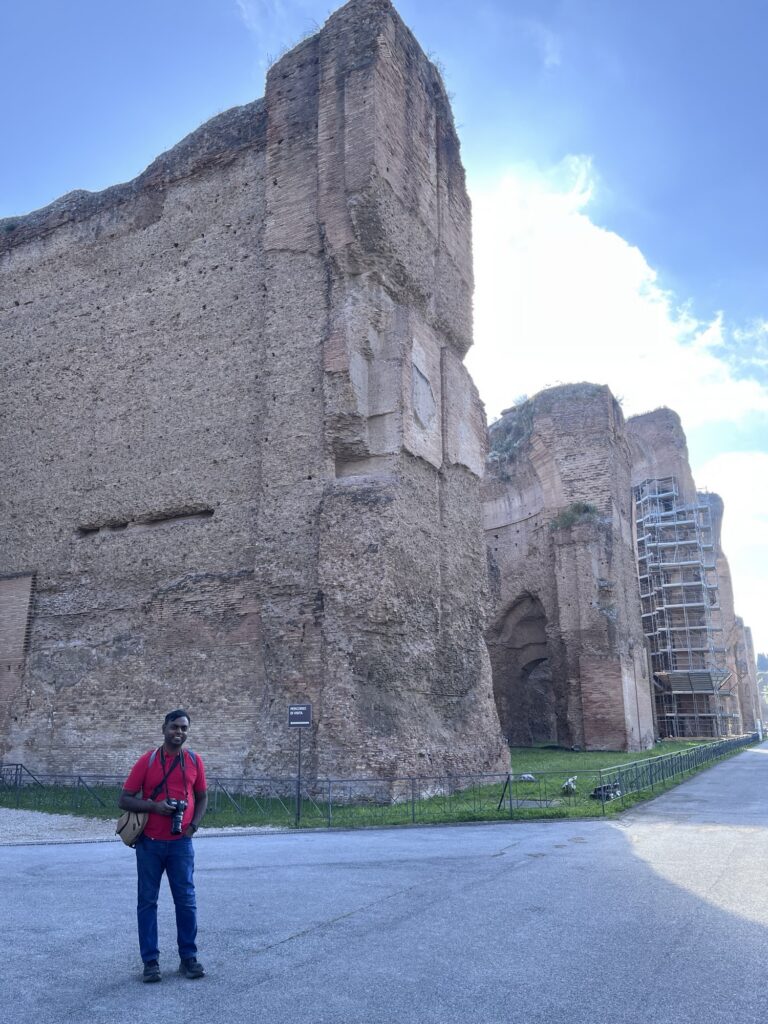
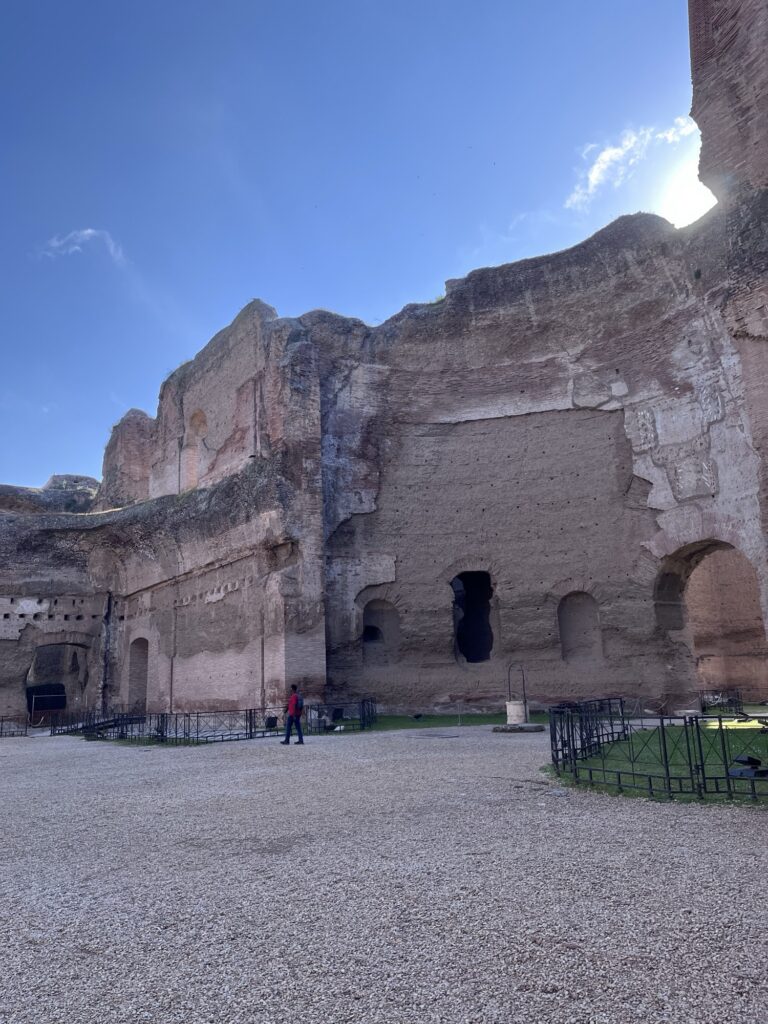
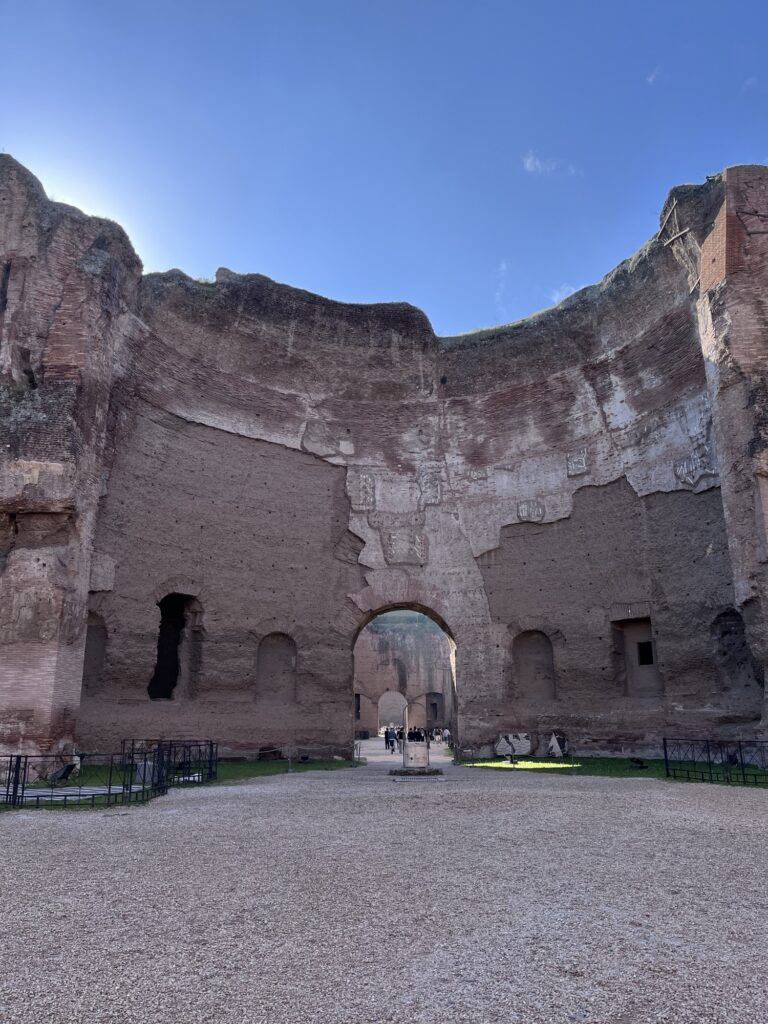
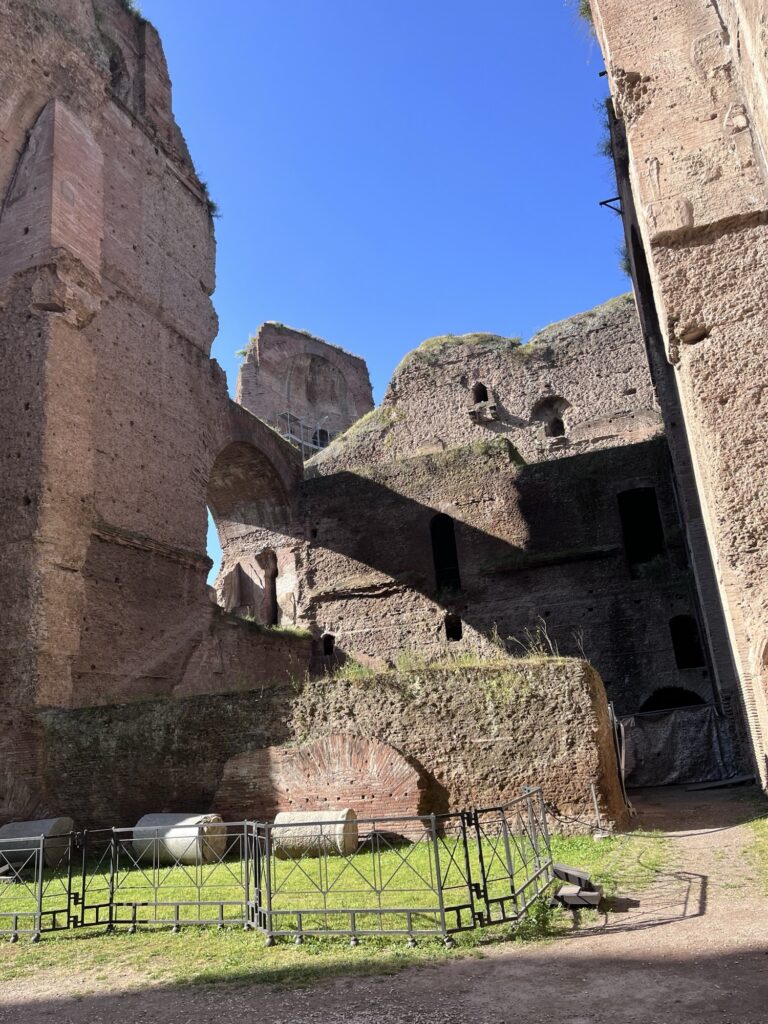
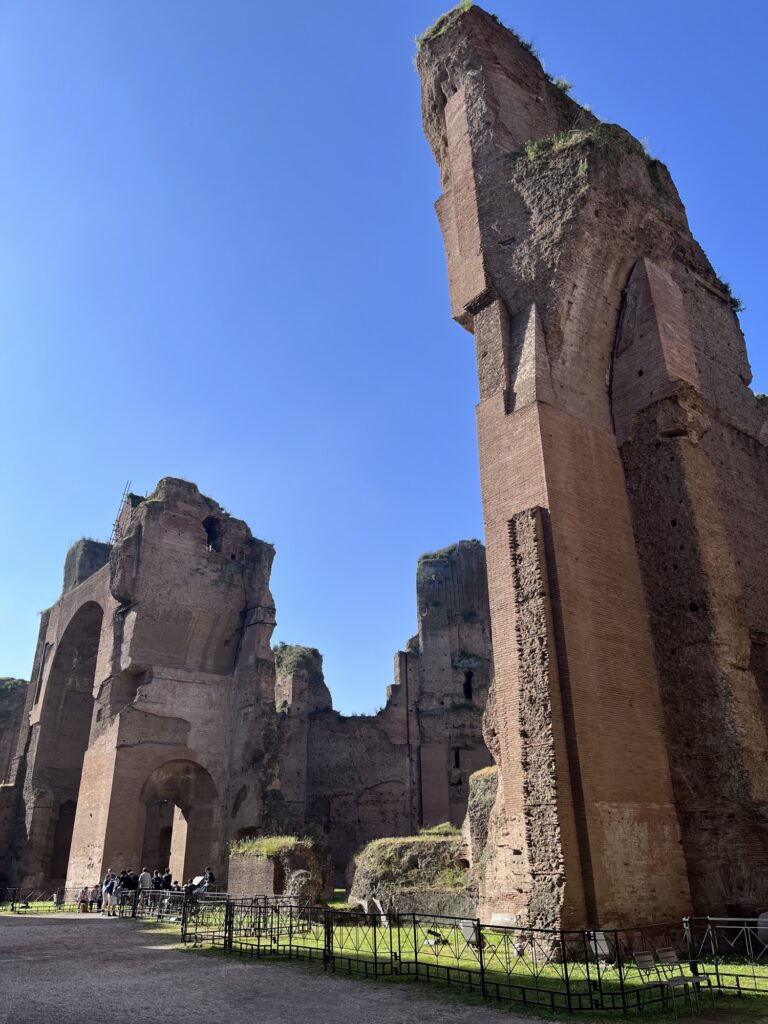
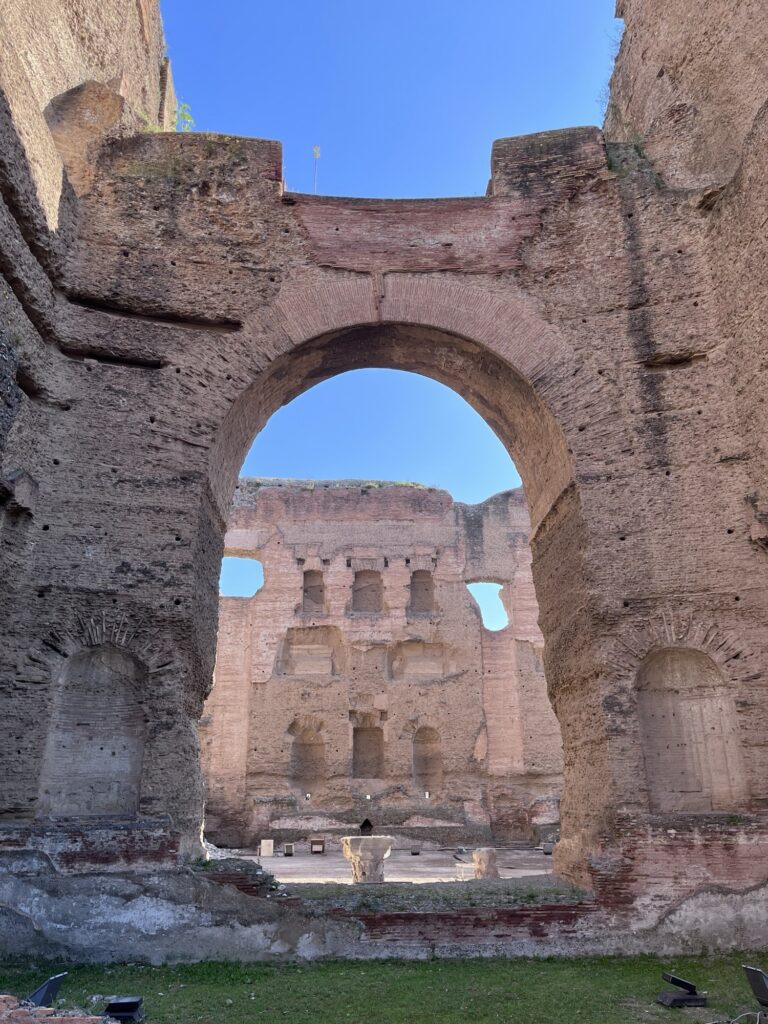
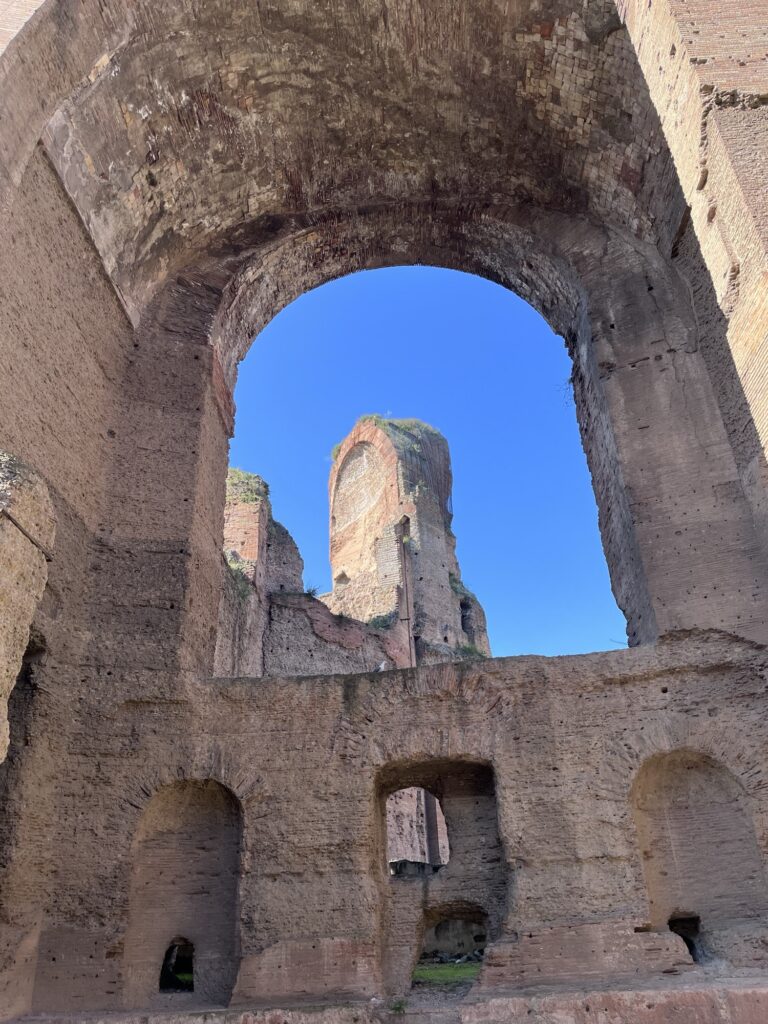
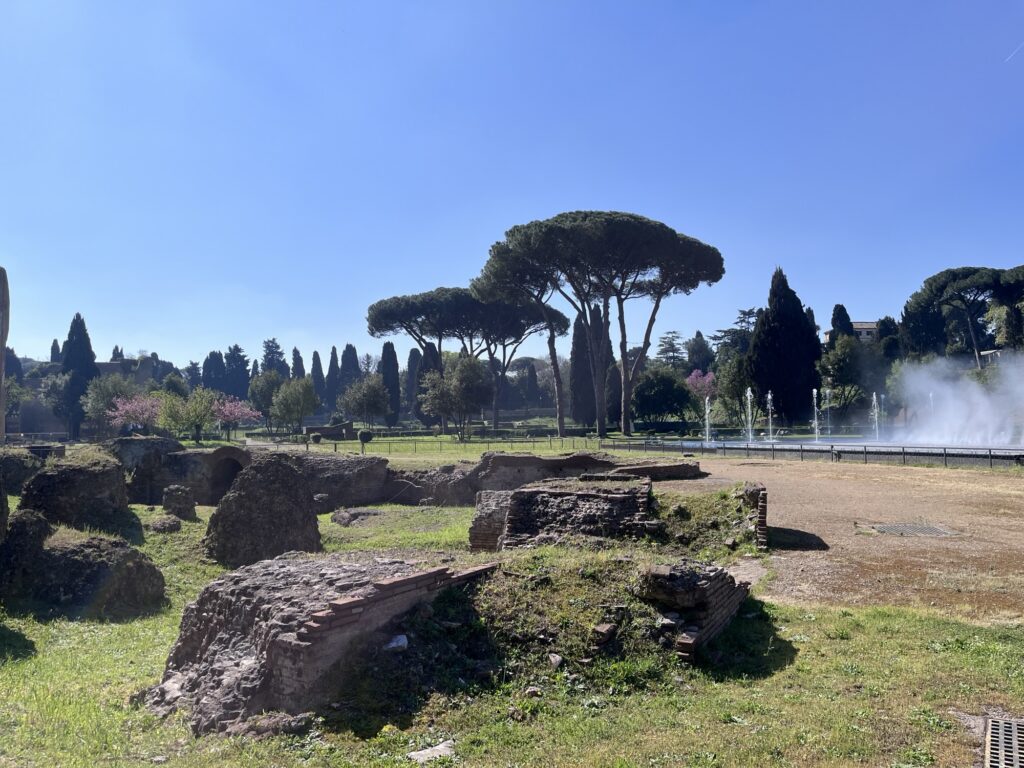
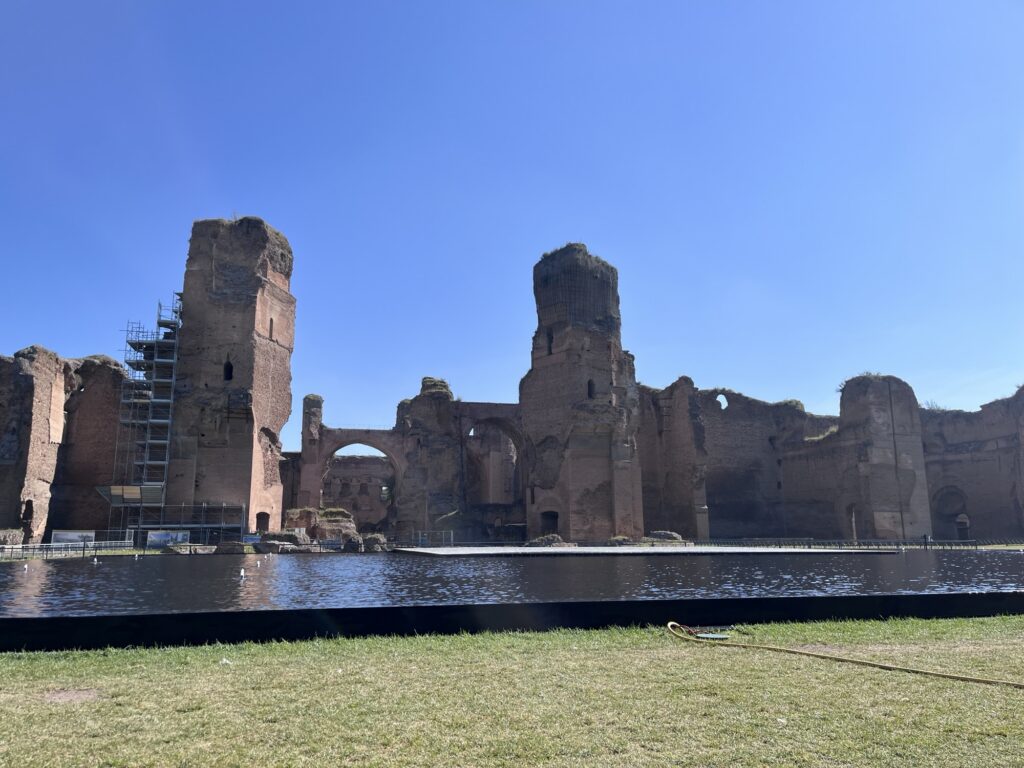
We finished our walk through the ruins around 10, just as more tourists and tour groups began to show up. Outside the bath complex is a large lawn, gardens, and a fountain. We found a place to sit and simply enjoyed the morning sun for a while, admiring the epic view of the ruins rising in front of us.
From the Baths, we walked back to Viale Aventino and caught the tram (lightrail) to Trastevere. By this point we were very hungry but it was still too early for lunch. The first “bar” (cafe as Americans would call it) was very busy on a Saturday morning and the tables were full, so we had our first experience having a coffee standing “at the bar”. Ordering was confusing, first we picked our pastries and coffee, which we were handed at the bar. There were other people standing to eat as well, while others were trying to see in the pastry case to order. When we finished, we went to the front register to pay. Not quite the relaxing experience of our other breakfasts so far but certainly interesting.
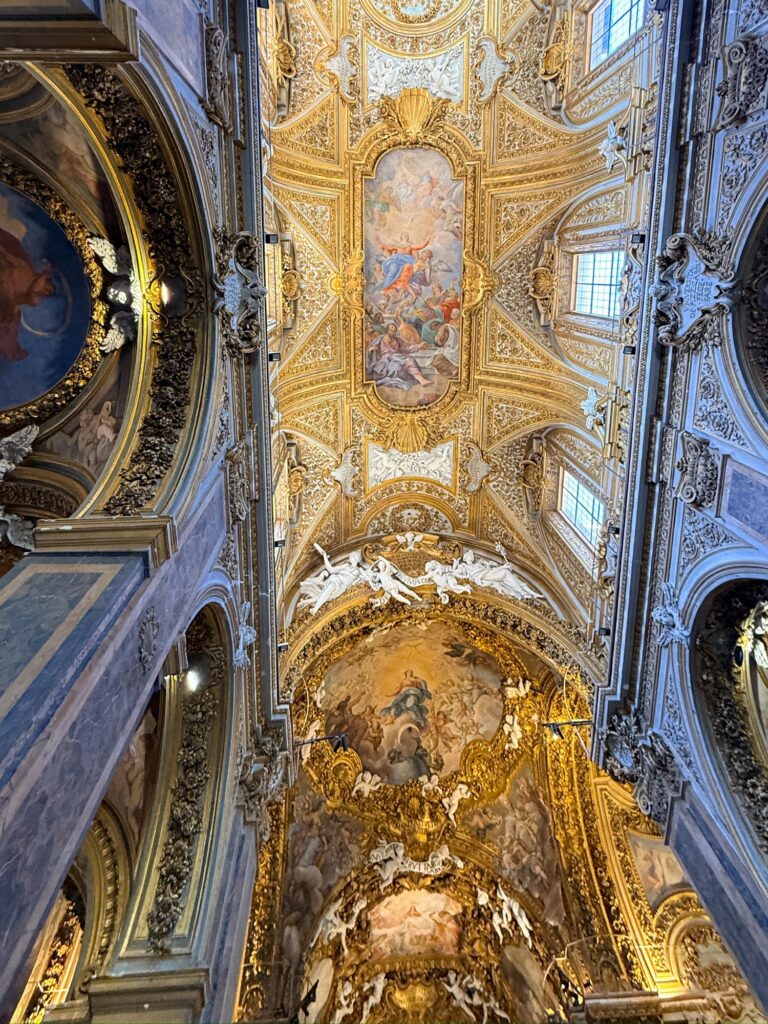
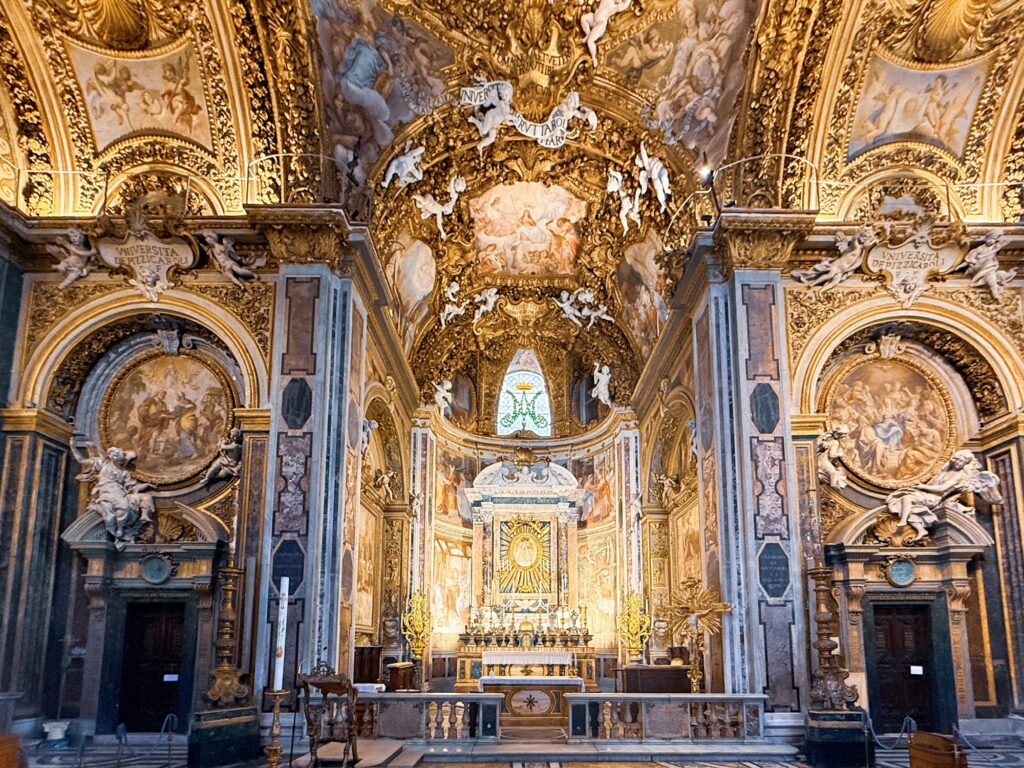
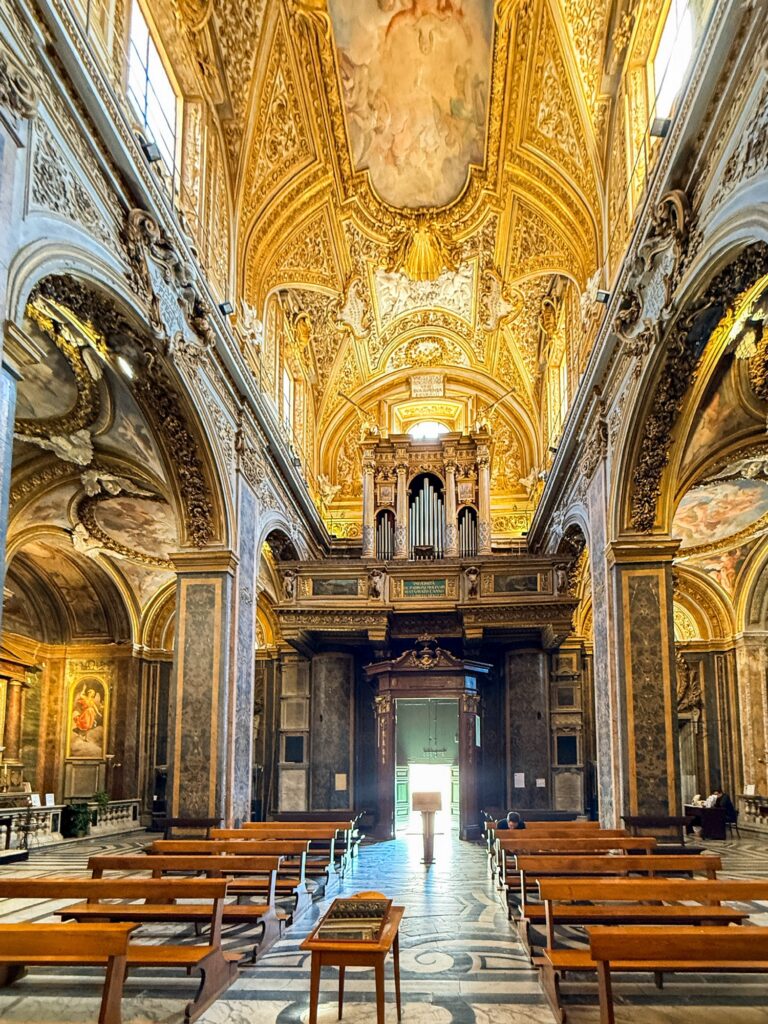
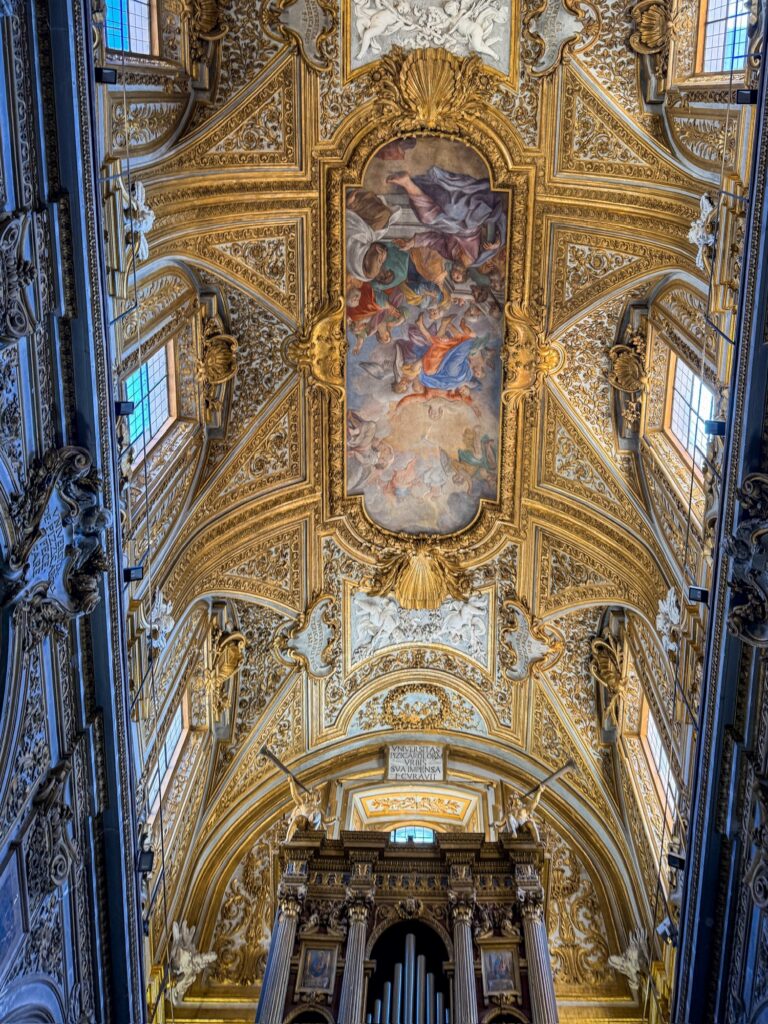
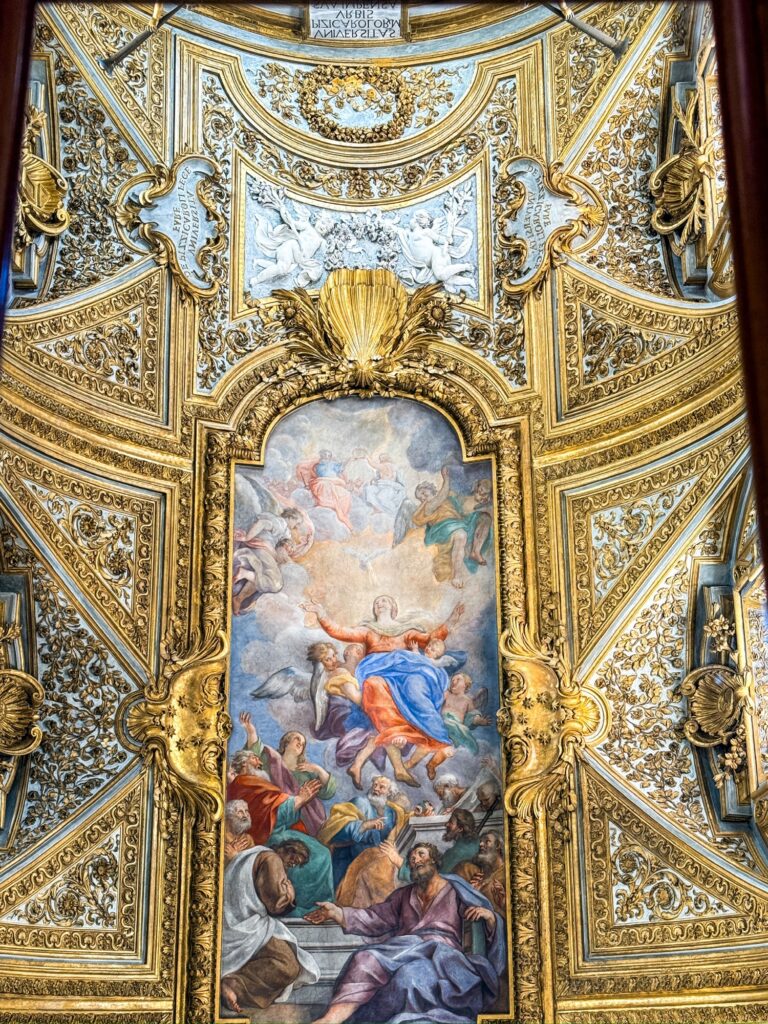
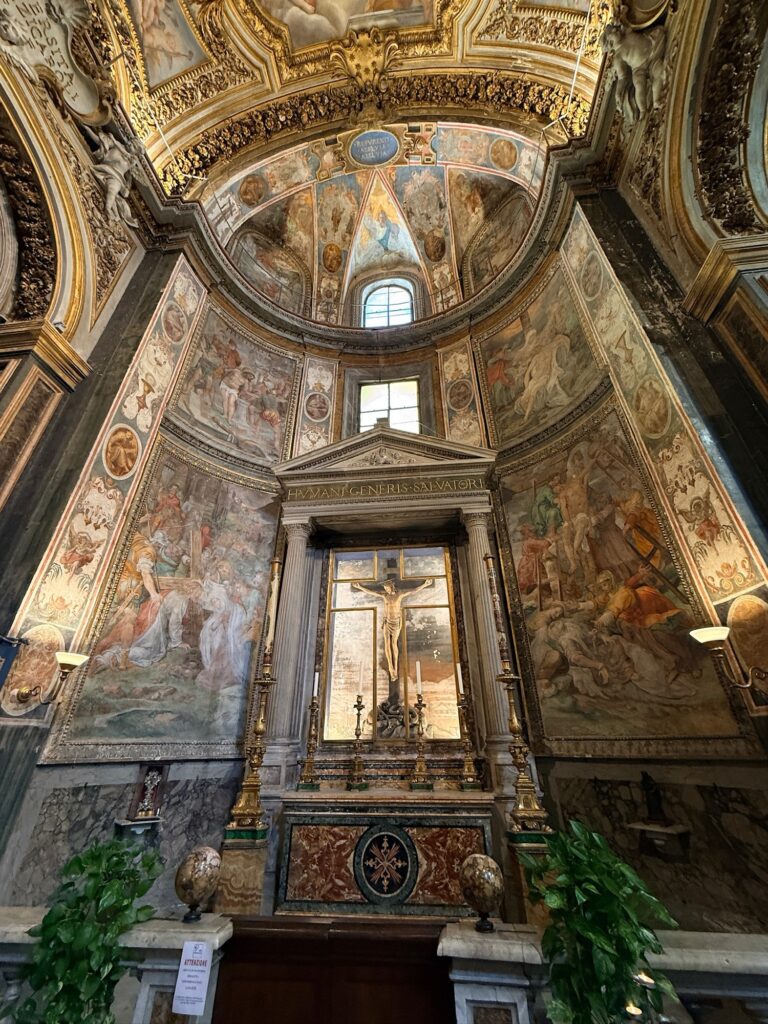
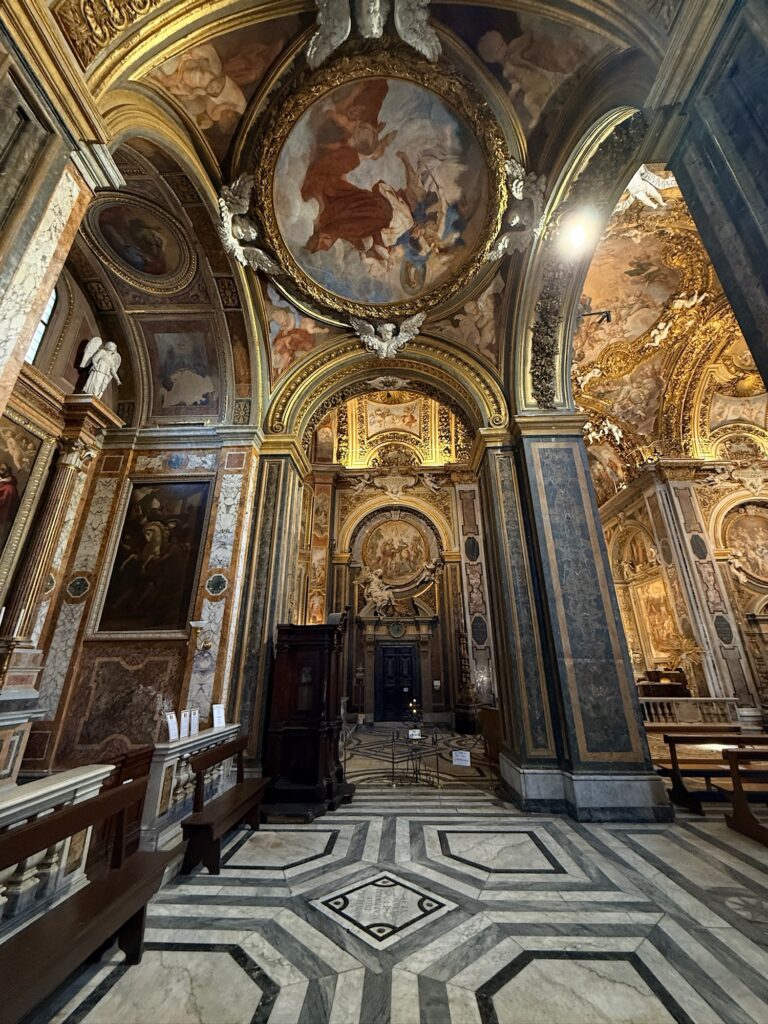
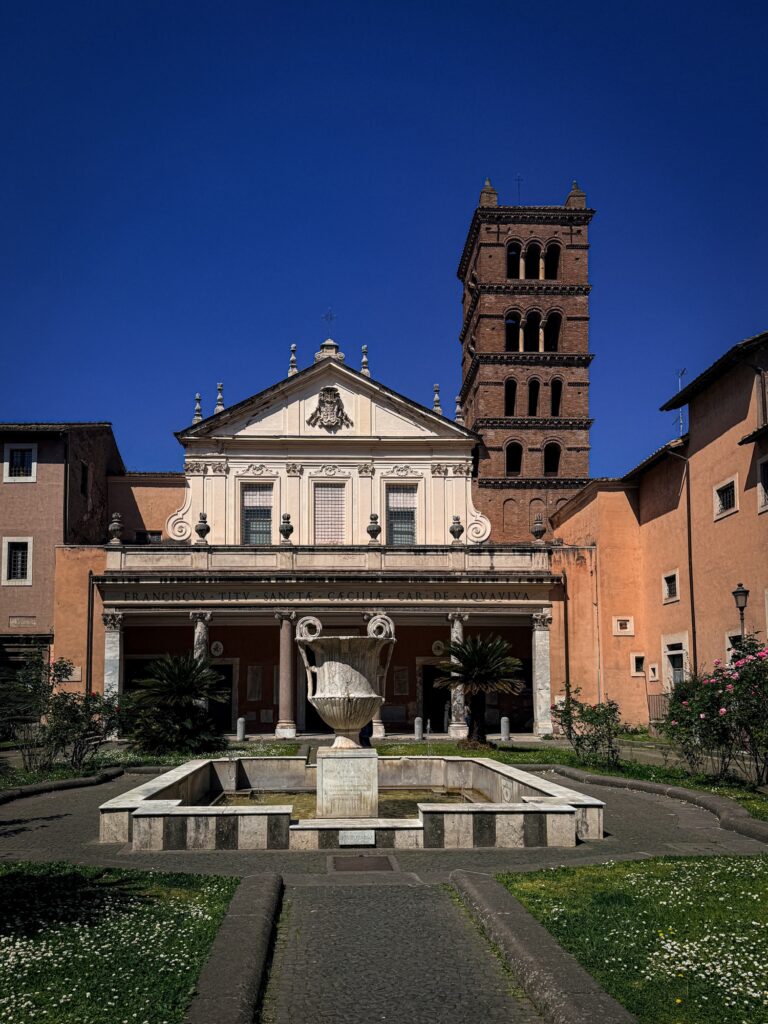
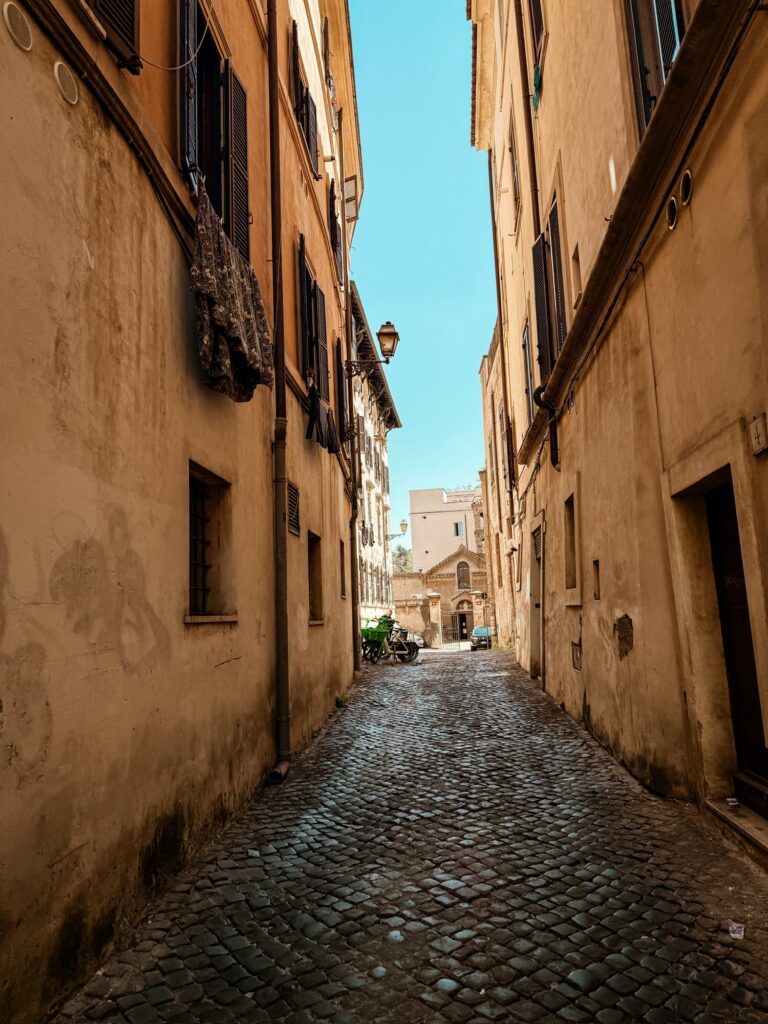
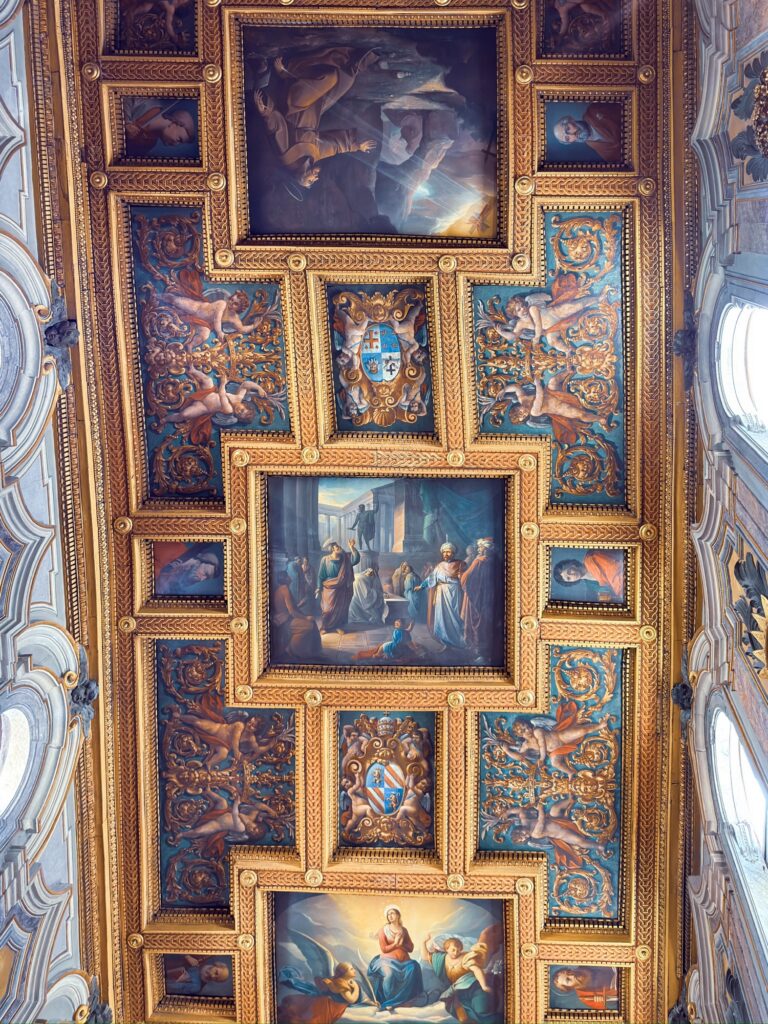
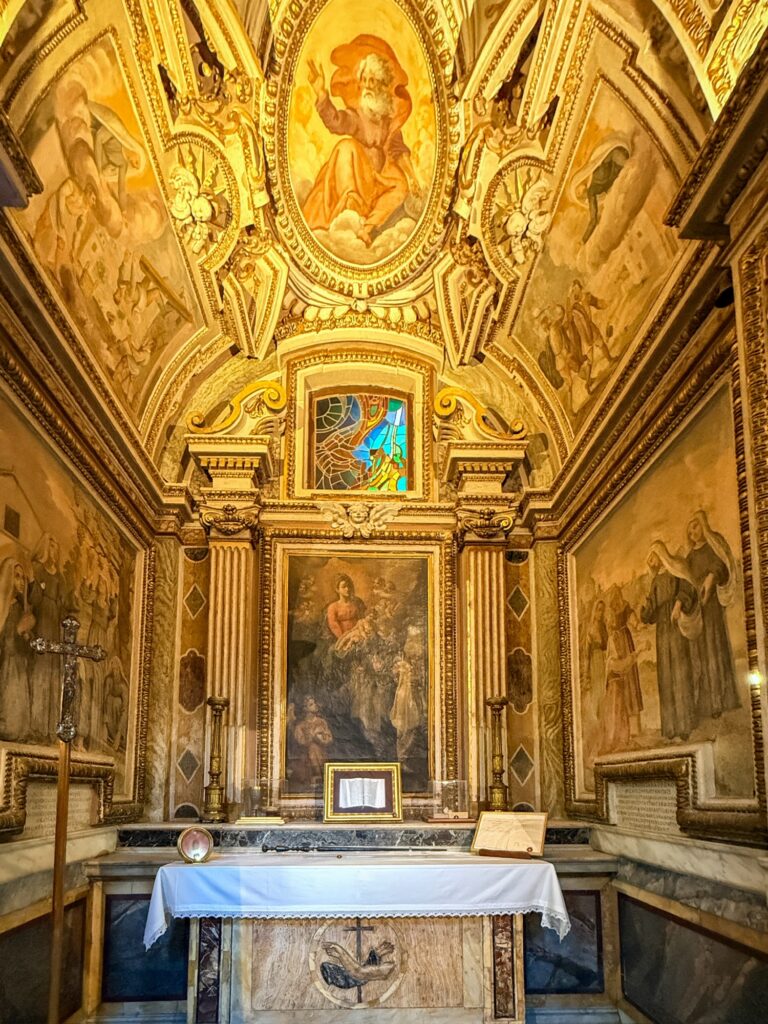
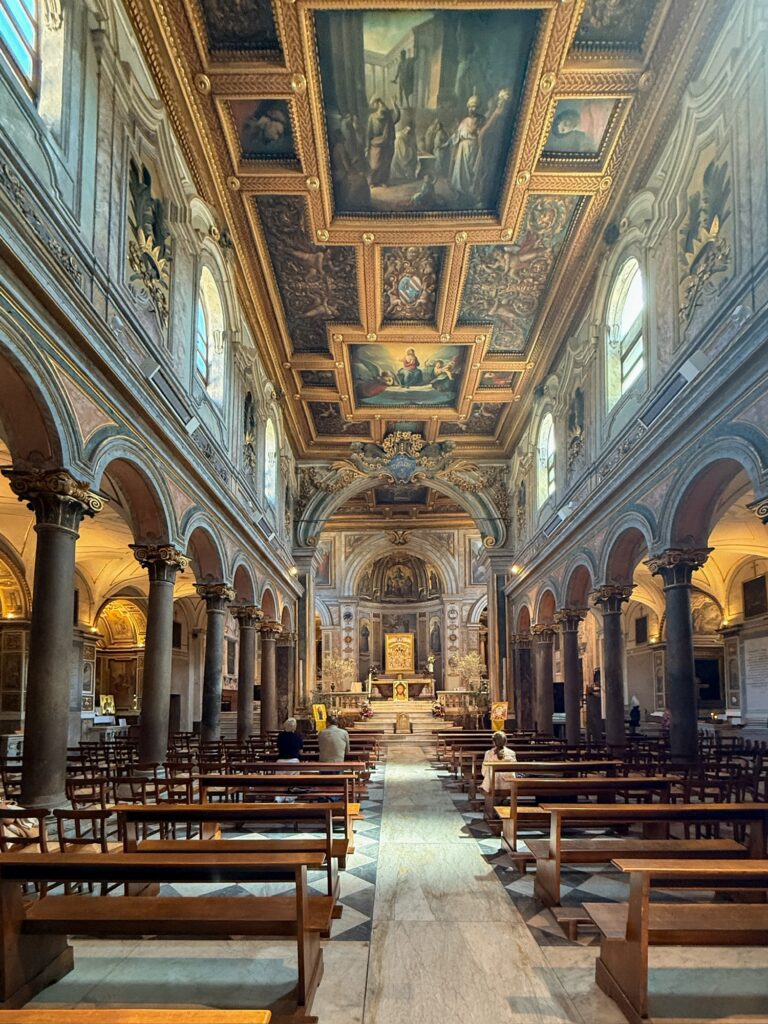
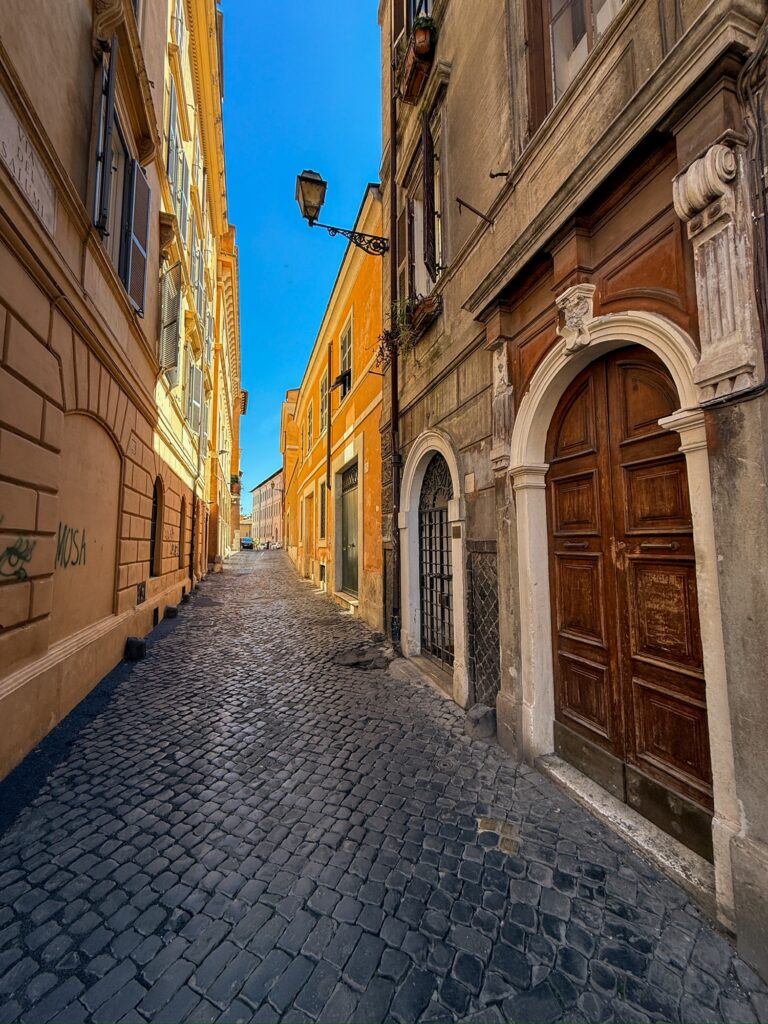
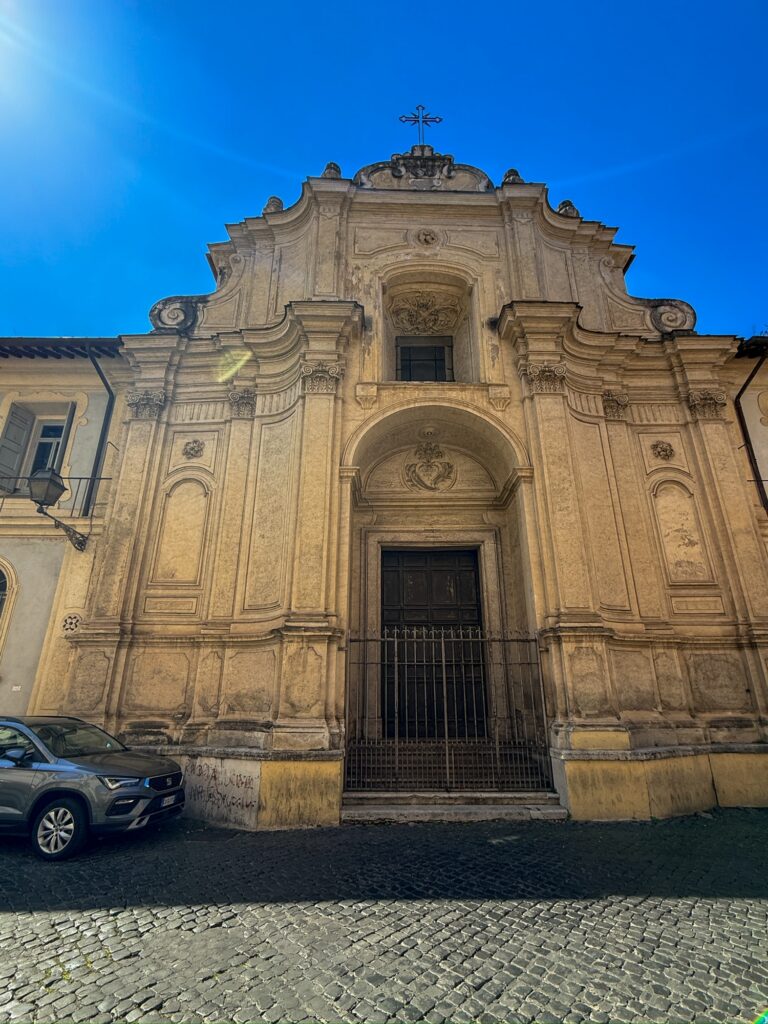
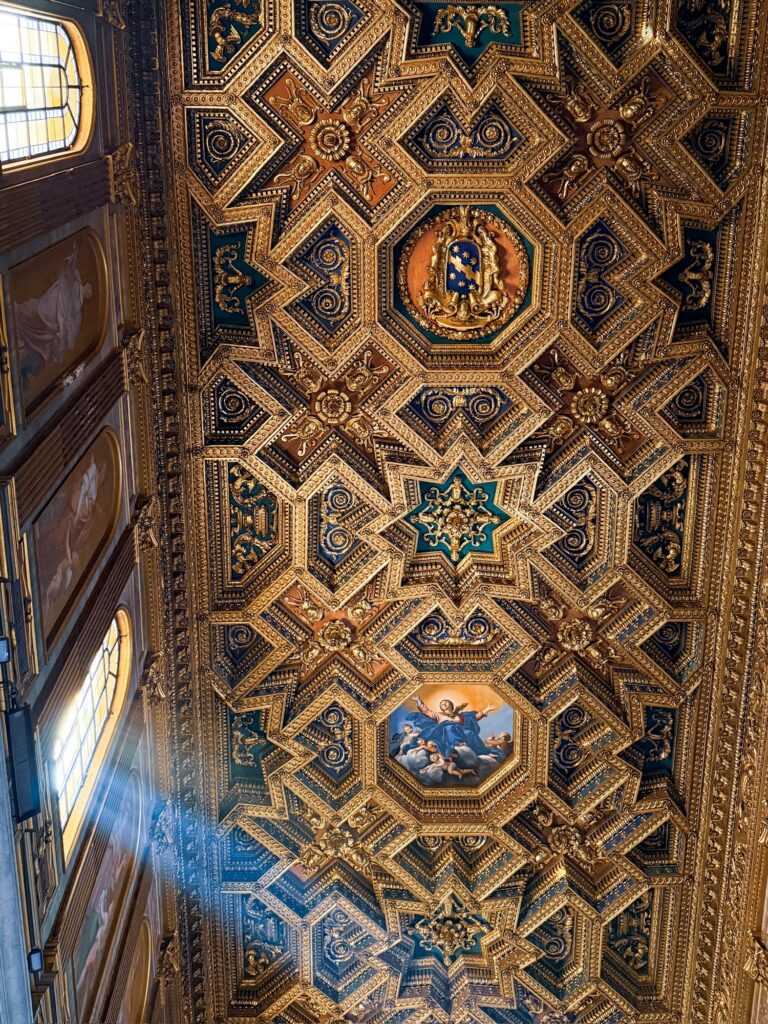
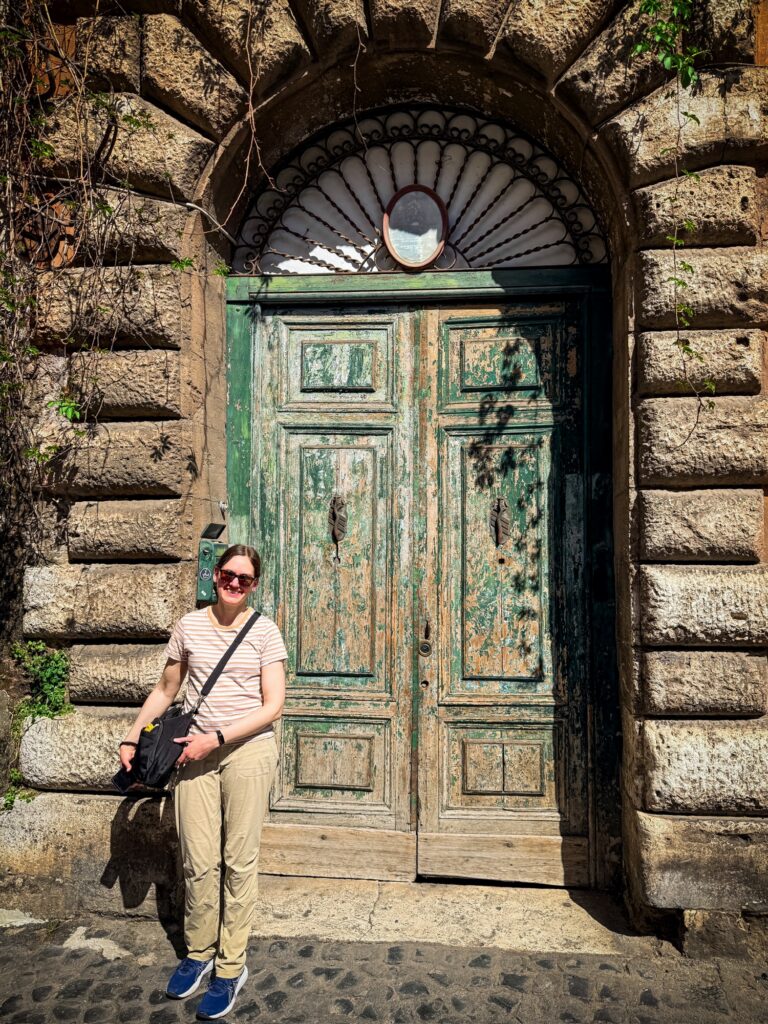
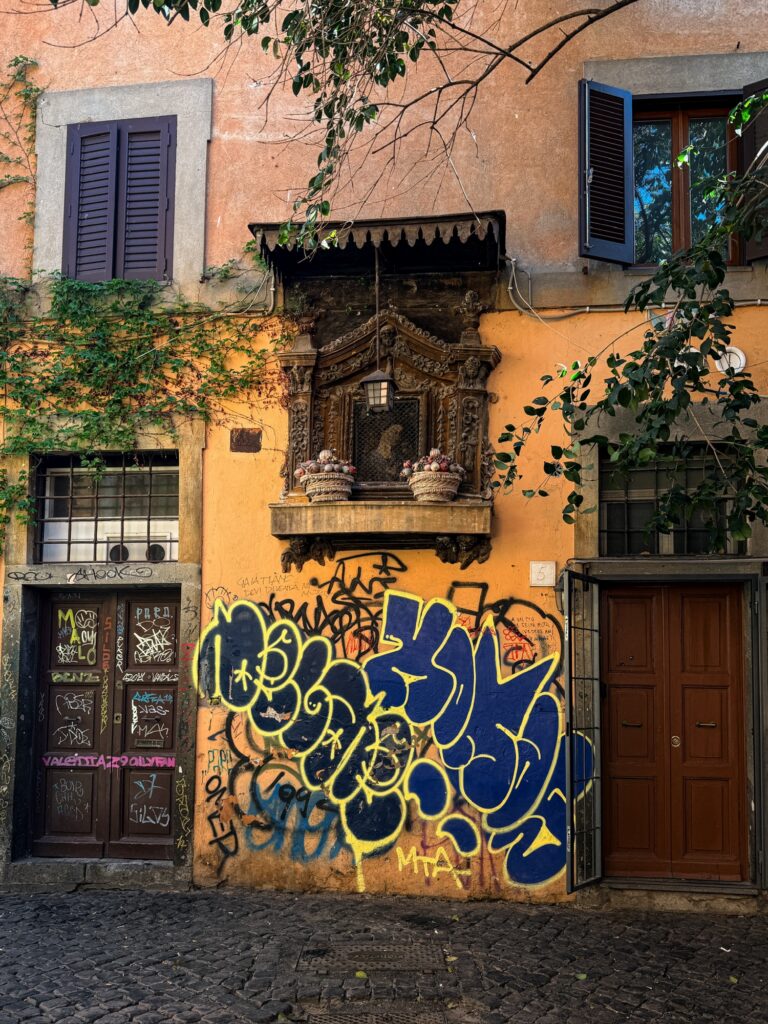
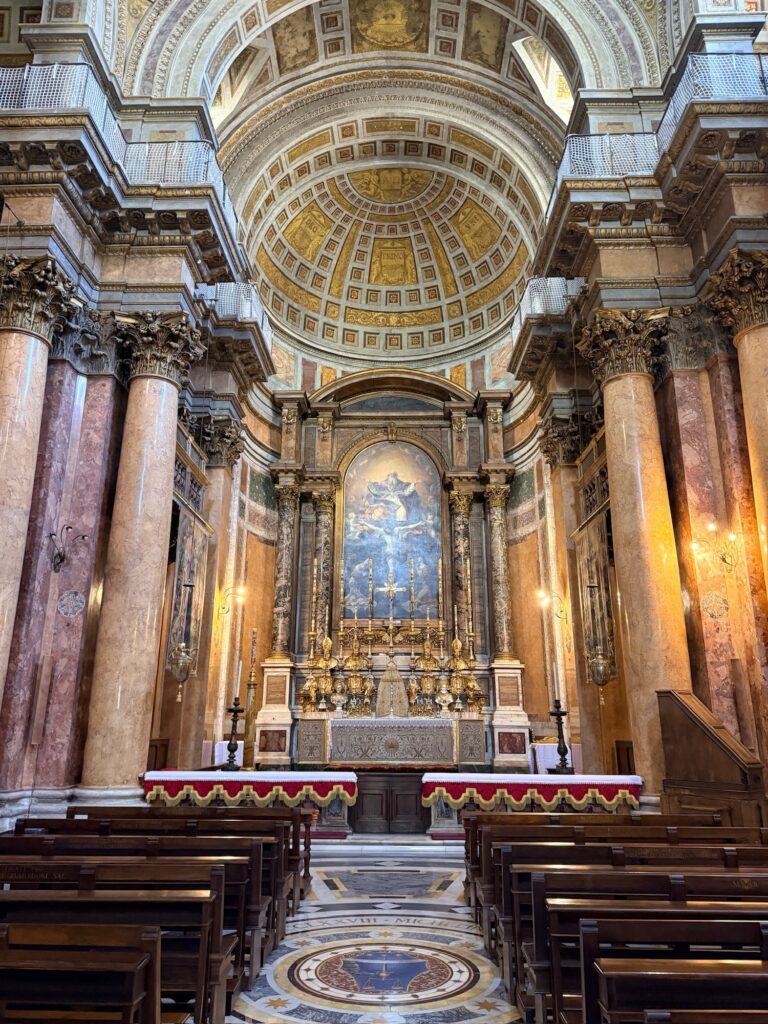
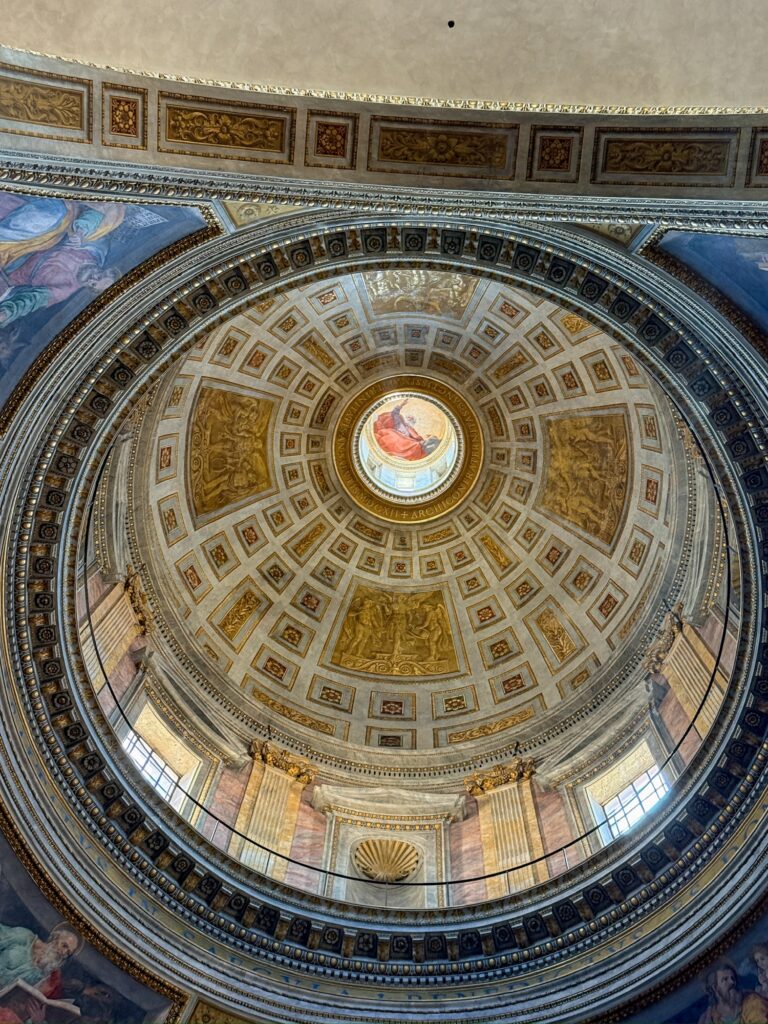
The neighborhood of Trastevere is characterized by its narrow winding cobbled streets and artsy flair. The buildings are old but the cultural vibe is modern. We wandered for a while through the more residential streets, pausing at churches to look around and to sit for a few minutes. At the church of Santa Cecilia in Trastevere, we were lucky enough to chance upon a nun playing the organ so we stayed a while to listen. The next church we stopped at was Chiesa Di Santa Maria dell’Orto which has a stunning gilded ceiling. We also kind of heard the organ here, but they were either tuning or testing it and the resulting sounds were not as heavenly as one would wish.
By this time we were ready for lunch. Trastevere is full of restaurants, but on a bustling Saturday at lunchtime finding one was a little challenging. We passed by the main tourist streets with their tightly packed outdoor seating, and wound our way into the side streets. There we found Hostaria Dar Buttero. It had no outdoor seating and the inside was comparatively peaceful. This turned out to be a great choice. It was a small, family-run restaurant with very friendly hosts and amazing food, and the prices were considerably lower than on the tourist streets as well. We took a leisurely and much-needed break to restore our energy.
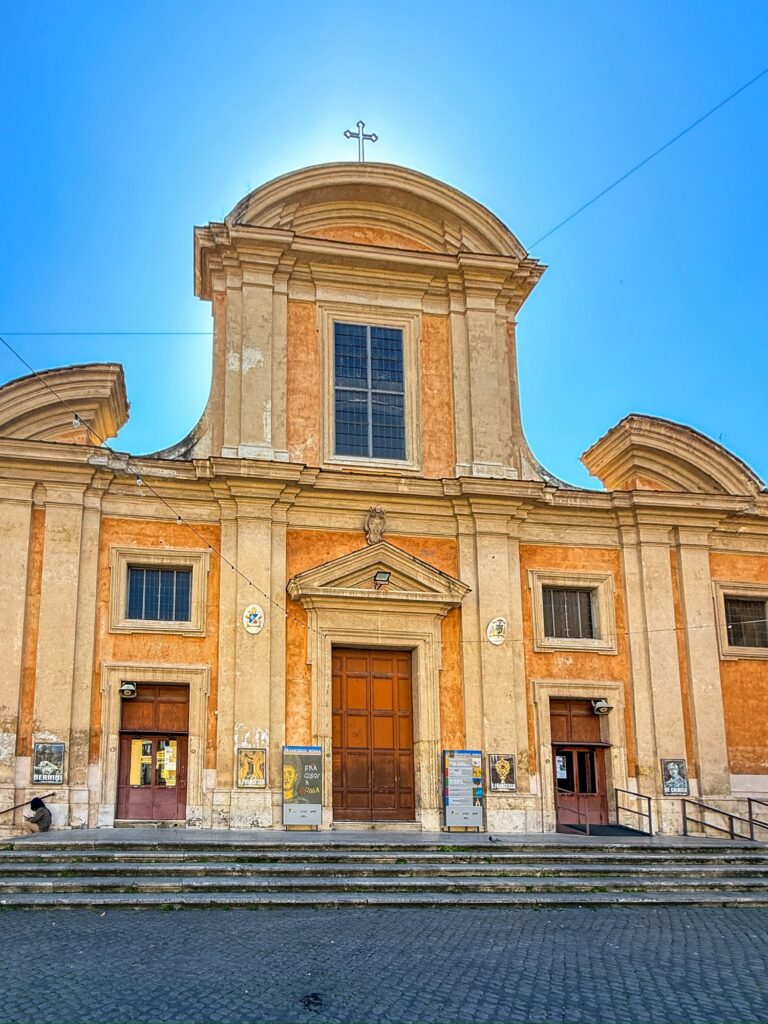
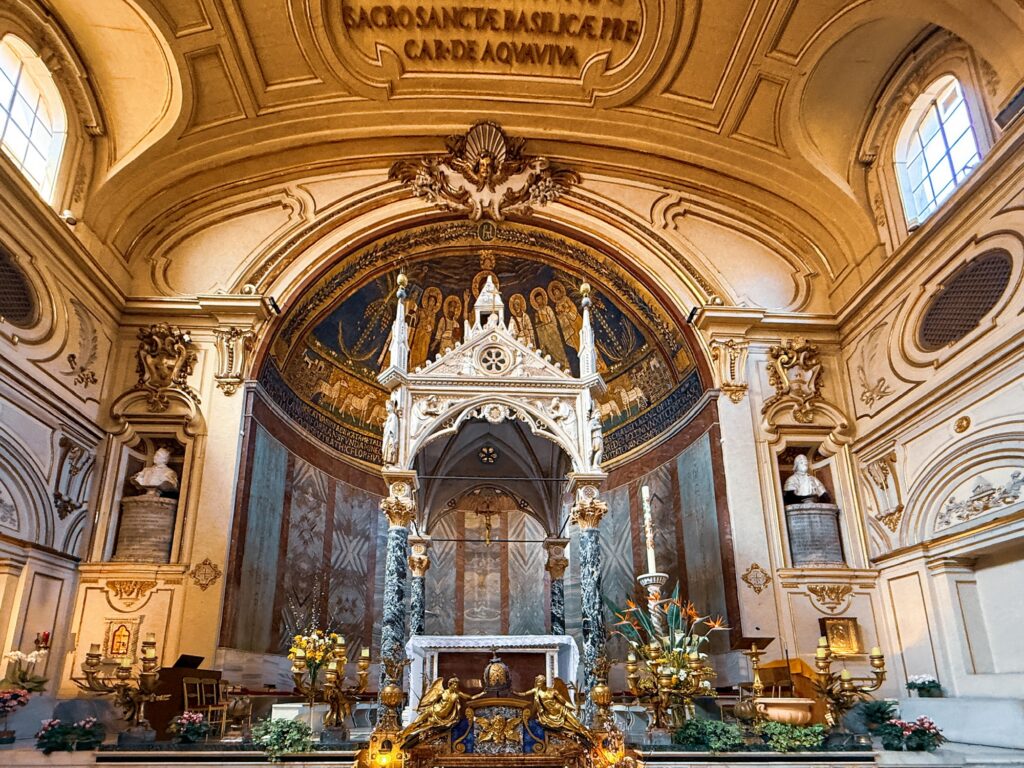
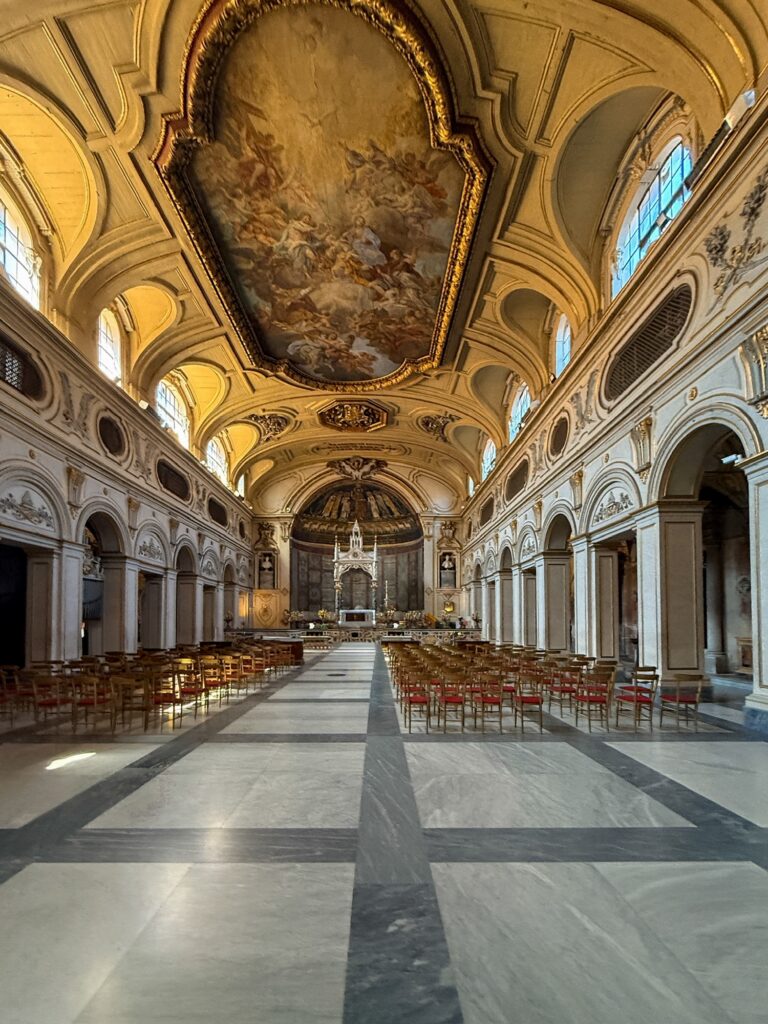
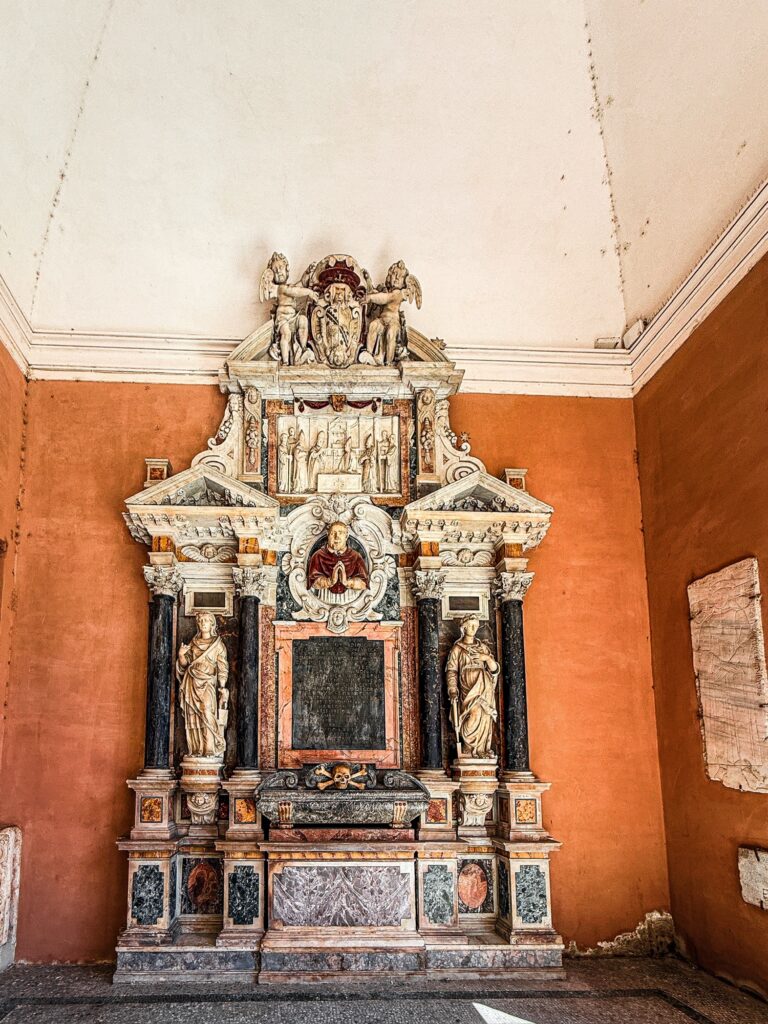
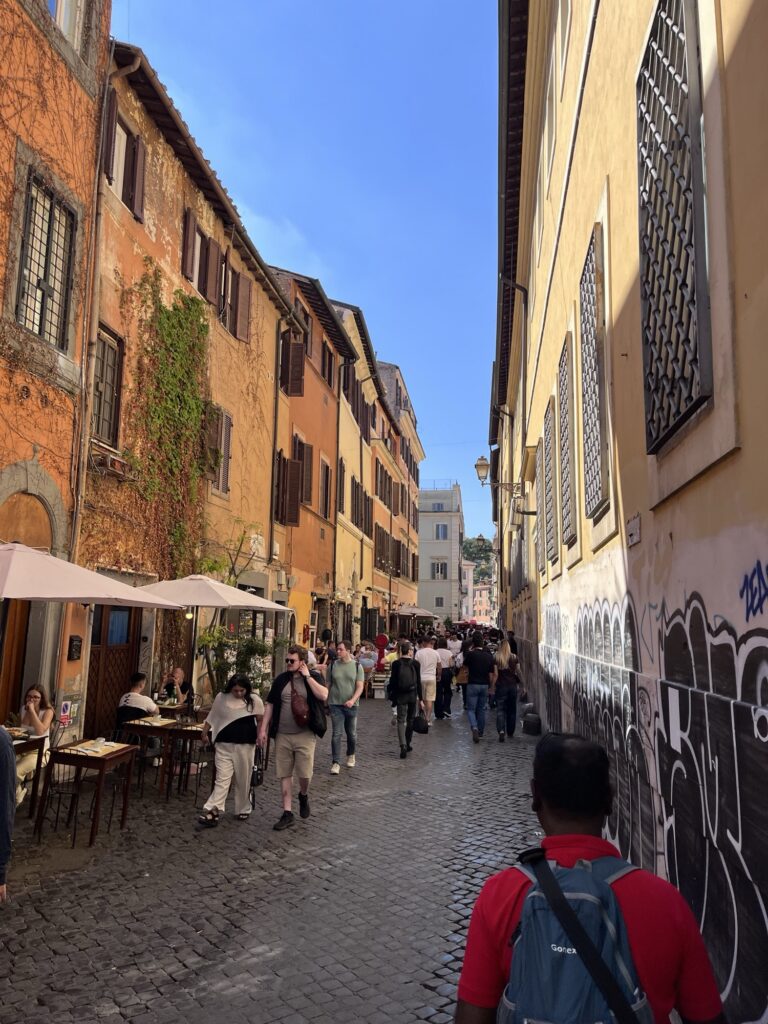
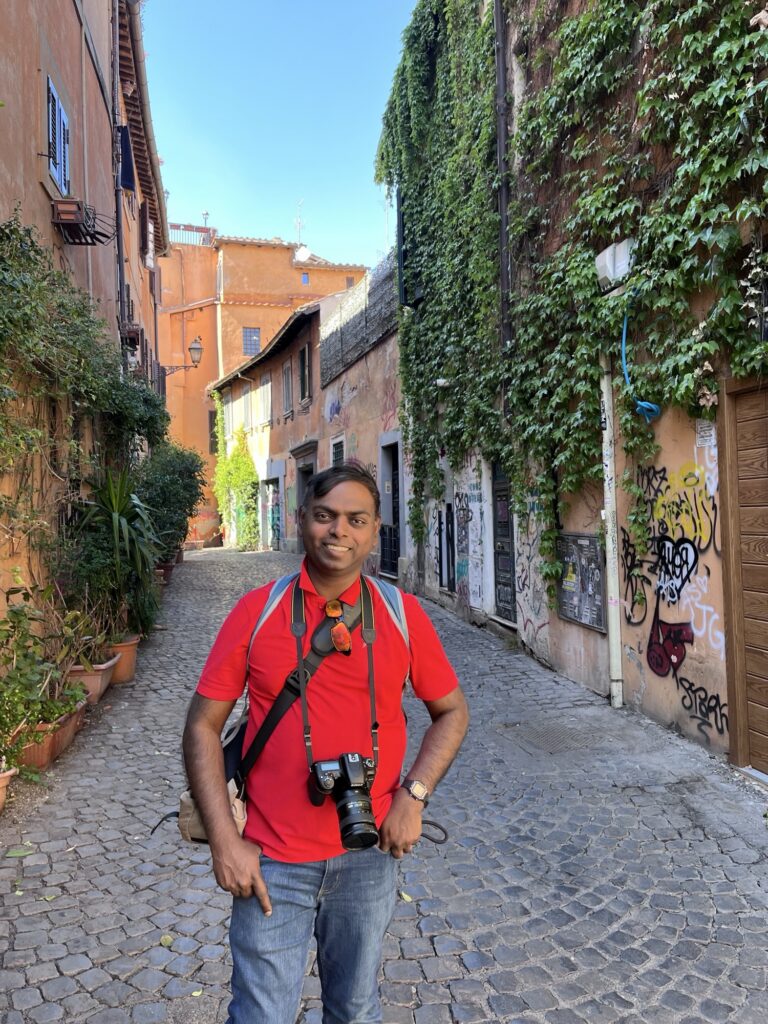
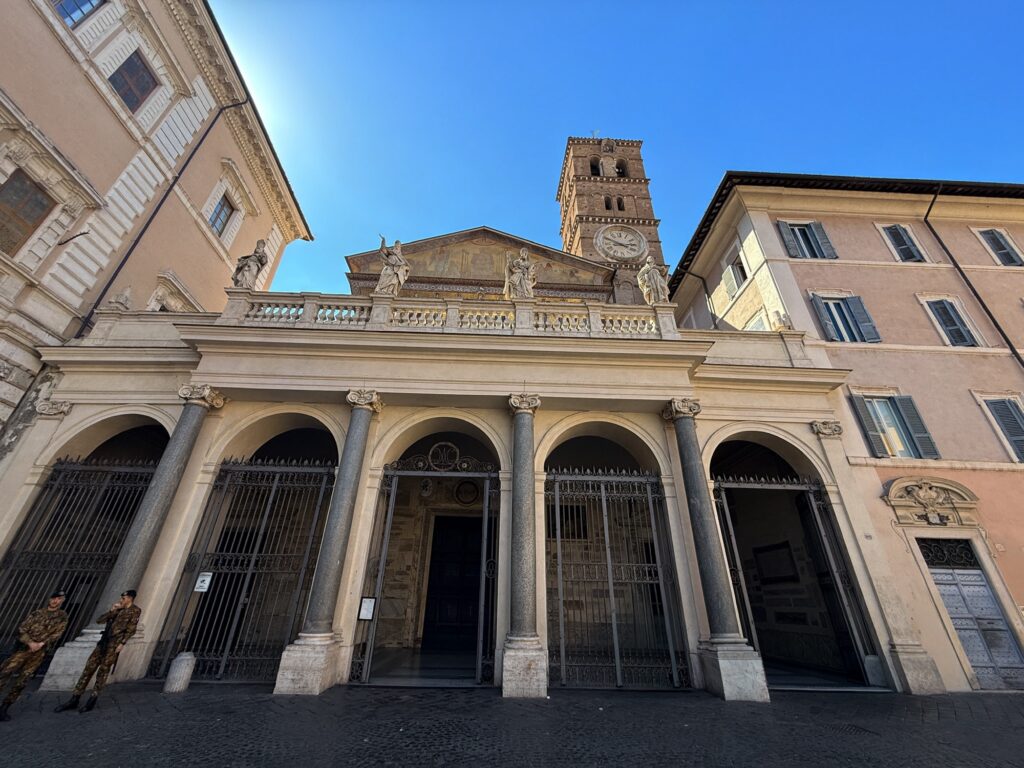
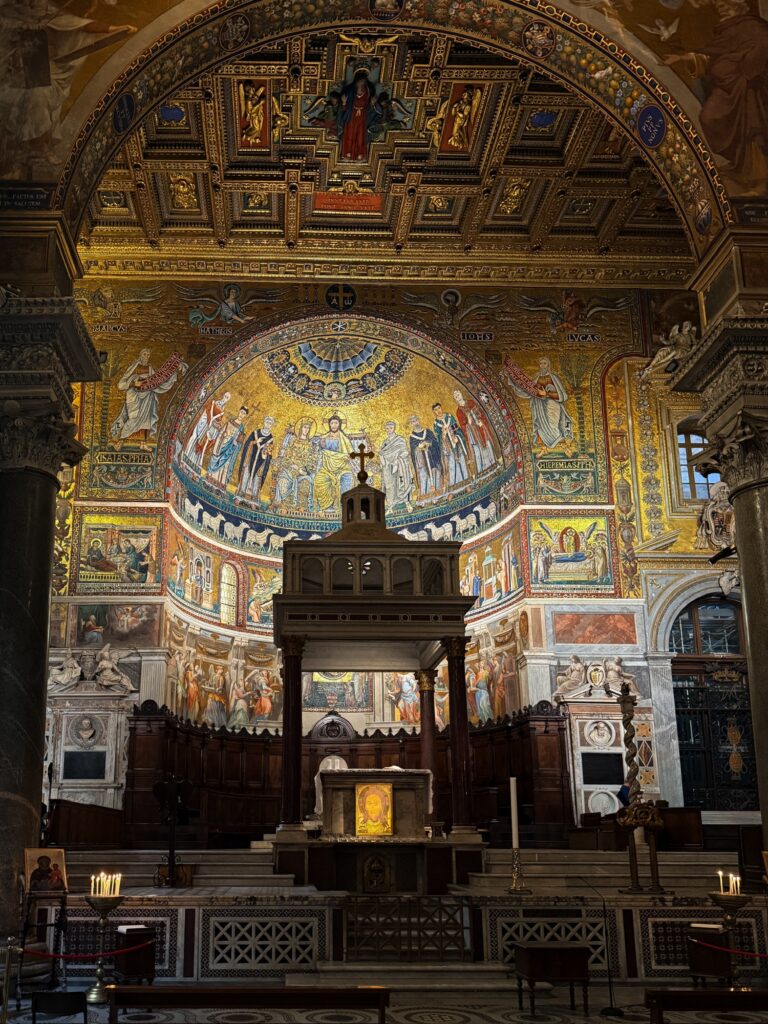
After lunch we headed back out into the alleys for some more exploring. Our final stop was the Piazza Di Santa Maria and Basilica Di Santa Maria in Trastevere. It is built on the site of what was possibly the first official place of Christian worship in Rome. Many parts of the currrent church date to the 12th century, and there are a number of incredible mosaics dating from the 12th to late 13th century. The 22 granite columns and lintel of the entrance door came from the Baths of Caracalla, an interesting connection to wrap up our day.
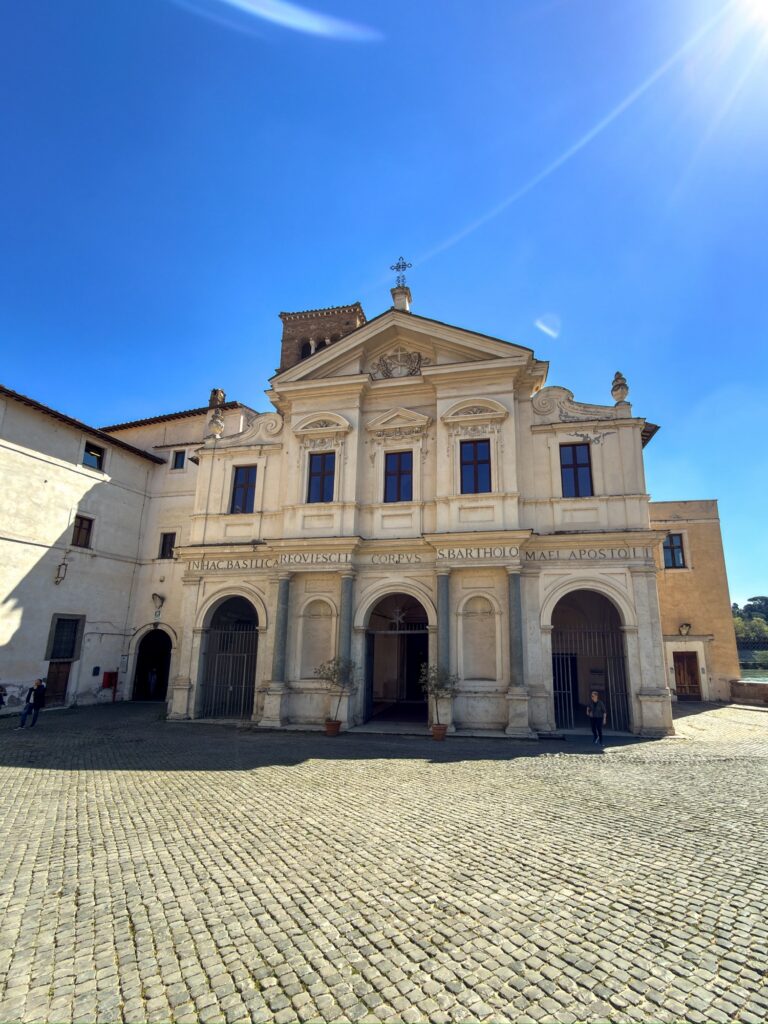
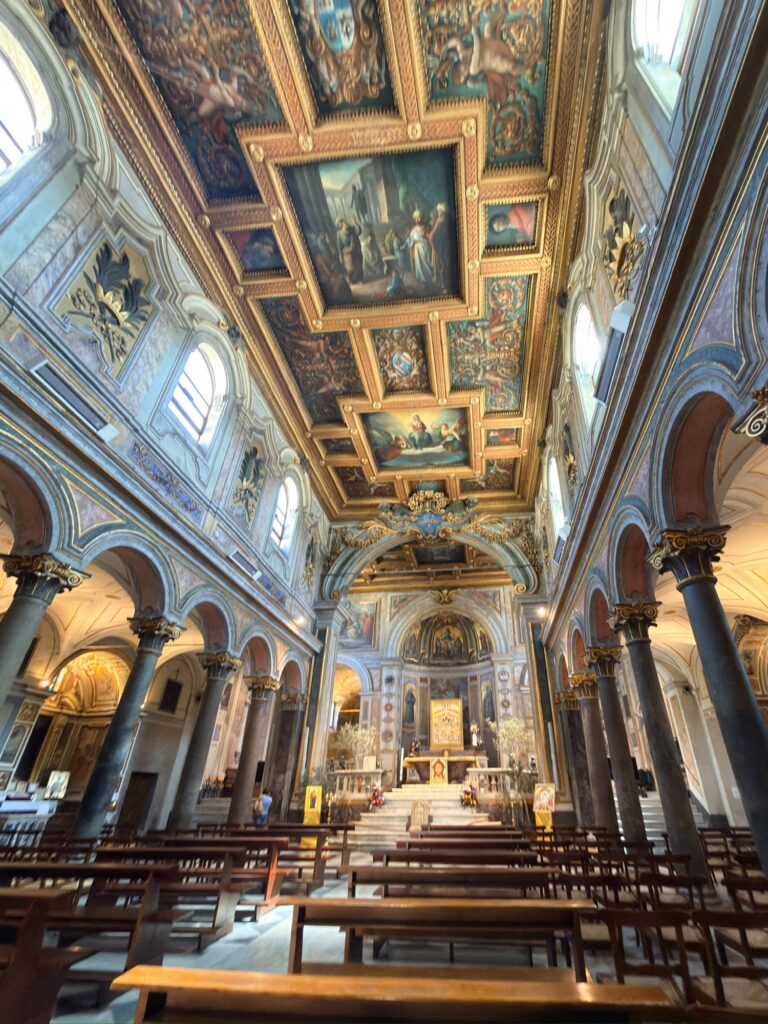
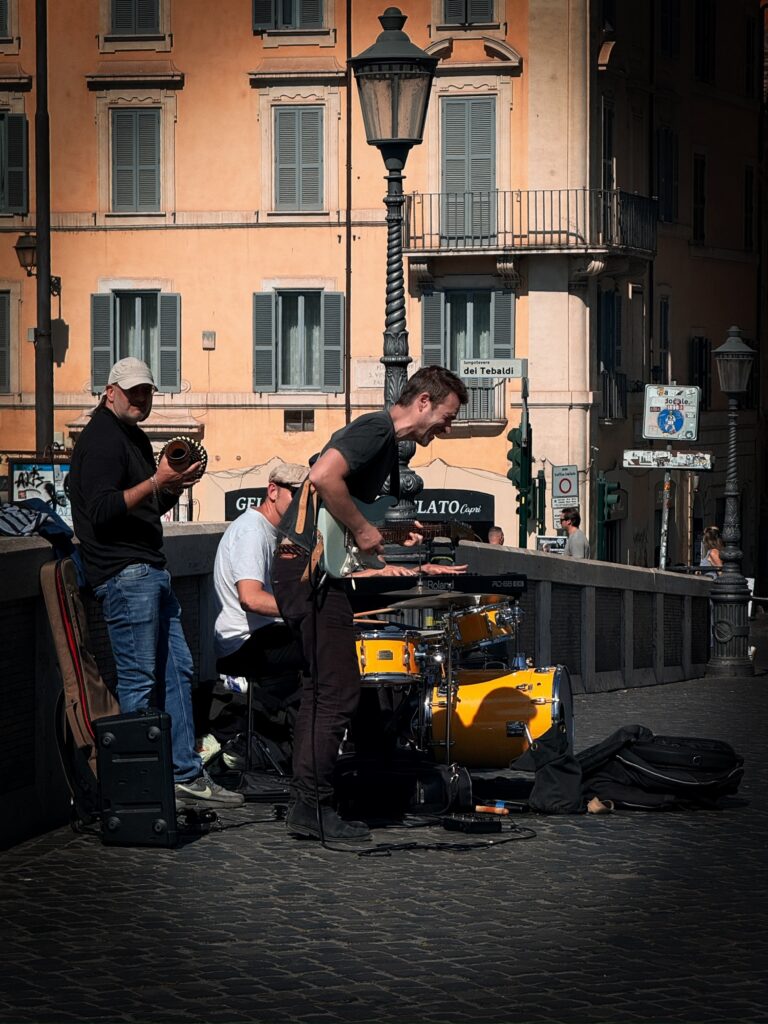
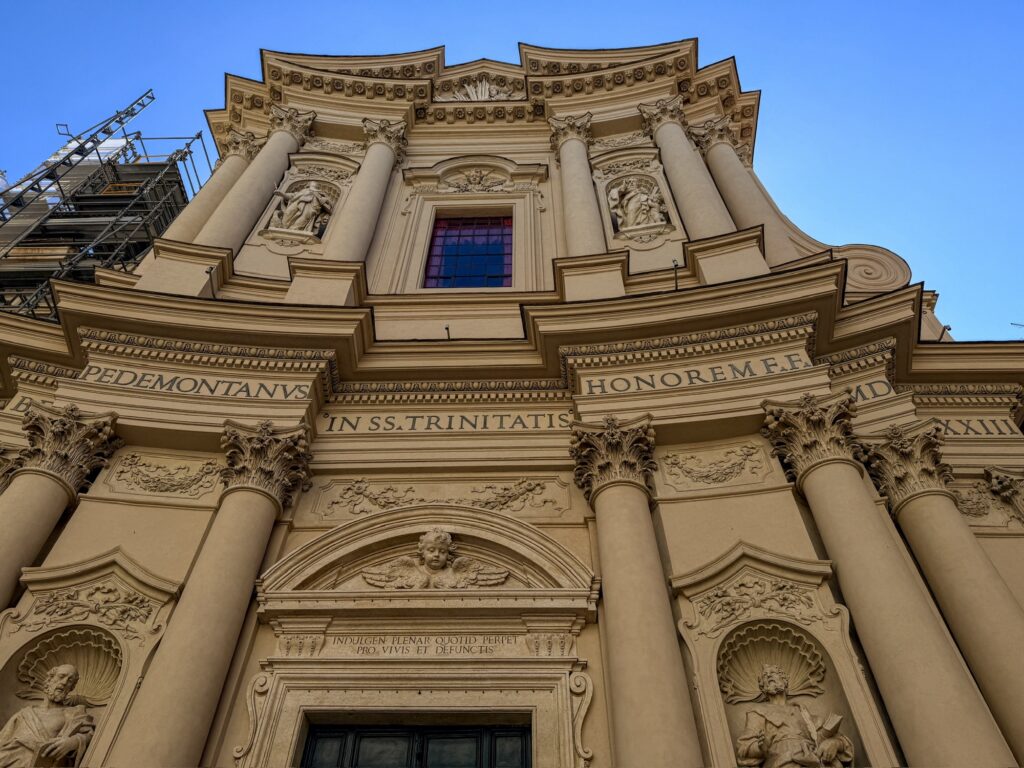
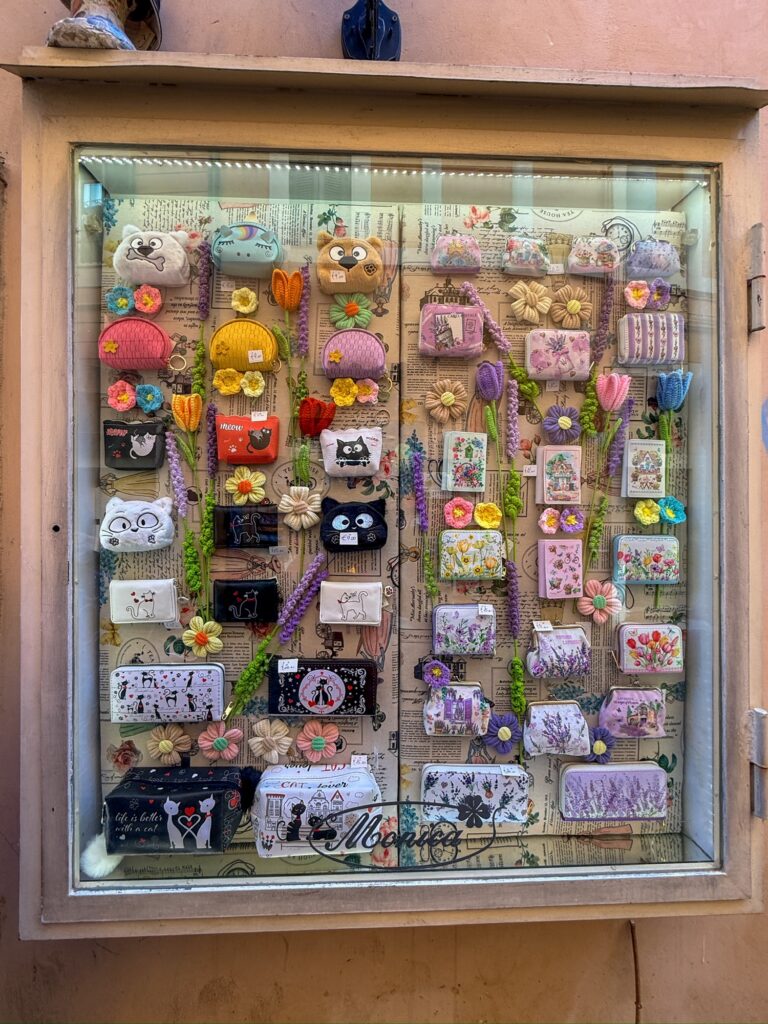
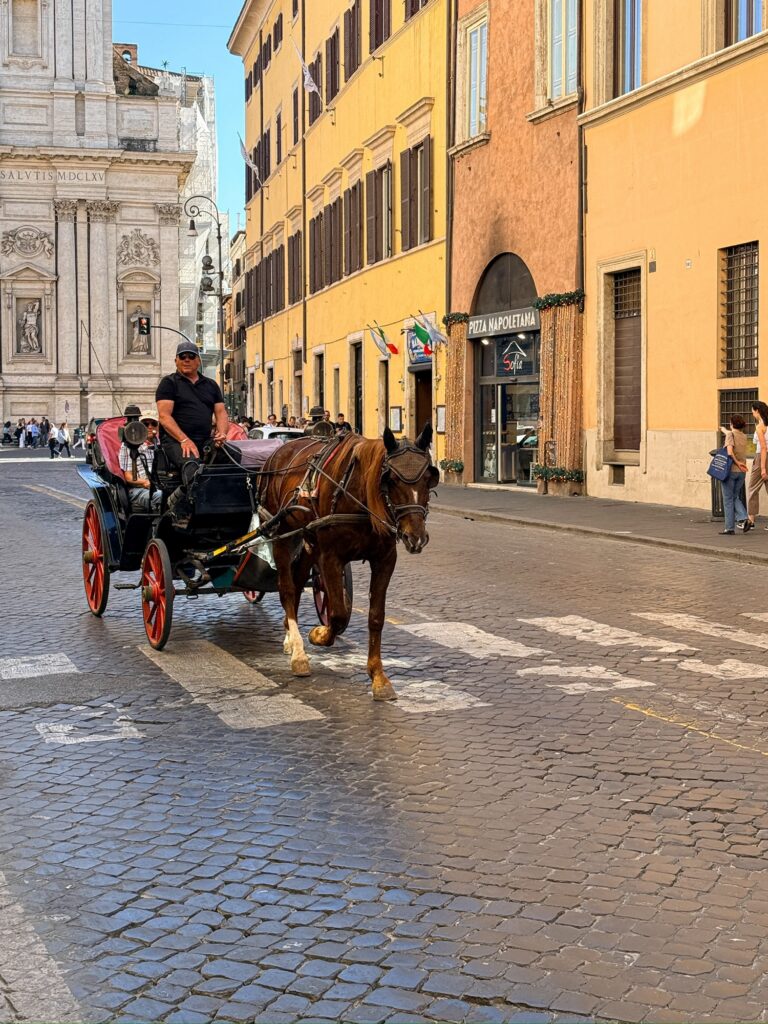
Or nearly wrap up. Once again we were in a weird limbo space without good public transport connections back to Prati. The nearest bus stop didn’t have another bus coming for half an hour, so we decided to walk half a mile to one with more connections. This took us back into the center of Rome headed toward Piazza Navona. We had a thought of stopping at the Piazza, but the crowds and our feet decided otherwise so we simply caught the bus for a smooth ride back to our room.
In our four days in Rome we walked nearly 28 miles. The weather was absolutely perfect, sunny with highs between 70-80. I’m so glad we were visiting in the spring, we wouldn’t have been able to do nearly so much in the heat of the summer and while there were crowds, they were generally manageable.
Now, onward to Florence!